

Commentary
Despite the agreement’s uncertainty, it’s still a significant development in regional and nuclear policy.
Andrew Leber, Jane Darby Menton
{
  "authors": [
    "Henok Asmelash"
  ],
  "type": "commentary",
  "blog": "Emissary",
  "centerAffiliationAll": "dc",
  "centers": [
    "Carnegie Endowment for International Peace"
  ],
  "englishNewsletterAll": "ctw",
  "nonEnglishNewsletterAll": "",
  "programAffiliation": "SCP",
  "programs": [
    "Sustainability, Climate, and Geopolitics"
  ],
  "regions": [
    "Iran"
  ],
  "topics": [
    "Energy",
    "Climate Change",
    "Security",
    "Foreign Policy",
    "Domestic Politics"
  ]
}
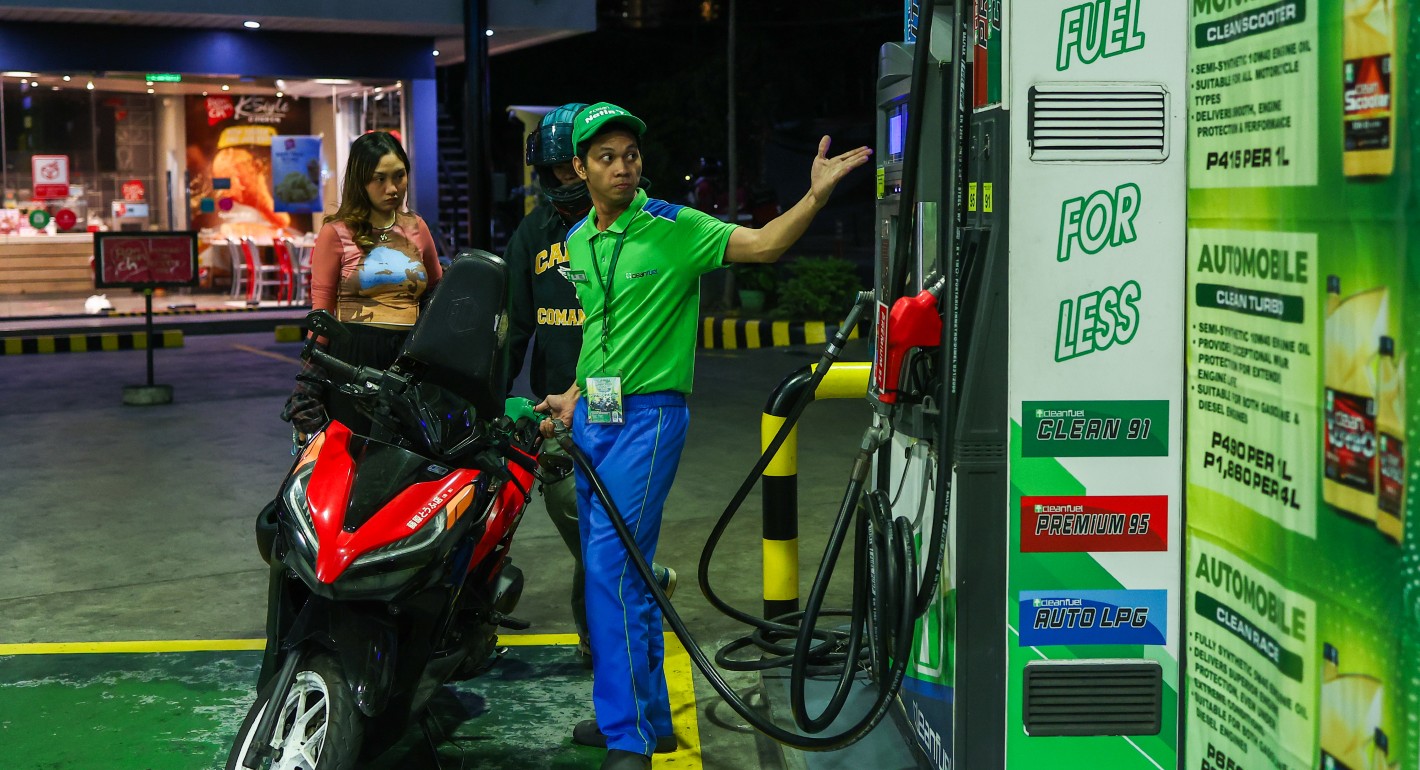
A motorcyclist gets gas in Manila on March 24, 2026. (Photo by Daniel Ceng/Anadolu via Getty Images)
Instead, governments should adopt climate-friendly measures to address the impact of rising prices.
The fallout from the U.S.-Israel war against Iran has once again brought the socioeconomic and geopolitical risks of overreliance on fossil fuels to the forefront of energy policymaking. The war has led to significant fuel shortages and rising prices worldwide—the result of the concentration of fossil fuel resources in a few (sometimes politically unstable) jurisdictions. Fuel price increases typically put immense pressure on governments to help blunt the impact on consumers and businesses.
Unsurprisingly, governments across the world have turned quickly to fossil fuel subsidies, with many citing the need to shield vulnerable groups from skyrocketing prices. However, these subsidies are often poorly targeted, encourage wasteful energy consumption, undermine the competitiveness of clean energy technologies and thereby derail the transition toward a sustainable energy future. These reasons are sufficient for governments not to rely on subsidies as first best policy, even on a temporary basis. Instead, governments need to deploy climate-friendly short- and long-term measures to address the impact of fuel price rises, rather than simply resorting to the easiest option.
Data show that governments around the world spent $916.3 billion in fossil fuel subsidies for coal, electricity, natural gas, and petroleum in 2024. Yet the Intergovernmental Panel on Climate Change has long concluded that these subsidies have “predominantly adverse environmental, economic, and social effects.” The International Court of Justice, in its recent landmark advisory opinion, singled out fossil fuel subsidies as potential wrongful acts under international law. They run counter to the obligations of states, notably under the Paris Agreement, to limit global average temperature to below 2 degrees Celsius and move budgetary spending away from carbon-intensive and climate-vulnerable development. Subsidizing fossil fuels is also inconsistent with numerous international commitments almost all countries have undertaken over the past two decades.
But governments tend to renege on or ignore their reform commitments during energy price shocks. For example, the 2022 energy price shock led global fossil fuel consumption subsidies to exceed $1 trillion for the first time. In this latest crisis, European governments have already committed over 10 billion euros in various forms of fossil fuel subsidies, while South Korea allocated $17.3 billion—mostly for oil refiners under price caps, cash vouchers for households, and aid for businesses hit by energy costs. South Africa cut fuel taxes for one month, Australia temporarily lowered its fuel tax, and Ethiopia enacted an emergency fuel subsidy. Several other countries in Africa, Asia, and Latin America have introduced similar subsidies to cushion the impact of the Iran war’s energy price shock.
Most of these subsidies are being introduced on a temporary basis, but governments often struggle to remove fossil fuel subsidies once introduced. In addition to their resistance to reform, fuel subsidies also send the wrong signal for energy efficiency and undermine efforts to promote clean energy technologies. Fuel price increases could help drive demand for clean and energy efficient technologies, but why install solar panels or purchase an electric vehicle when the government is certain to step in to subsidize the older technology?
These considerations reinforce the case against resorting to subsidies even in the face of high oil and gas prices. This is not to say that subsidies should not form part of governments’ policy response to energy price shocks. Fuel price increases disproportionately affect poor and vulnerable groups, and government responses should work to shield these groups from high energy prices. This is also why governments, organizations, and other actors often refrain from terms such as “elimination” and “removal” and focus on “reform” and “phase out” in fossil fuel subsidy discussions. The Glasgow Climate Pact, for example, explicitly underlines the importance of providing targeted support to the most vulnerable, in line with national circumstances.
But governments often find it is politically and technically easy to adopt general, economywide fuel subsidies such as price caps and tax breaks, which end up benefiting poor households relatively less than middle- and high-income households. (The latter group consumes significantly more energy than the former.)
Governments need to react to energy price hikes: Public and industry pressure, coupled with concern about the impact of high oil and gas prices on general inflation, make it extremely difficult not to respond. But instead of falling back on general subsidies, governments should chart a new way forward by deploying strategic short- and long-term measures.
Perhaps most crucially in the short term, countries should work to manage demand by seeking to reduce fossil fuel consumption (and household energy costs). The Philippines, for example, introduced temporary four-day workweeks for government employees that will lower energy consumption (and costs) via reduced commutes and shuttered office buildings. Indonesia also introduced fuel rationing to limit fuel consumption. Denmark has encouraged residents to reduce driving.
Understand the world with the latest from our scholars around the world.
Countries should also work to make public transportation more accessible. Spain has enhanced its support for affordable public transportation, and Australia introduced a similar measure that involves free or reduced public transportation in some regions. These measures are more environmentally and socially beneficial than directly subsidizing fuel consumption. Socially, they target the segment of the society that relies on public transportation. Environmentally, they encourage the use of mass transportation, instead of perpetuating the continued use of private cars through fuel subsidies.
And even though countries should move away from subsidies, a climate- and socially sensitive response should include some fiscal support directly targeted at poor and vulnerable groups. New Zealand, for example, has launched a one-year fuel relief package that provides weekly cash payments to low-income families to soften the impacts of high fuel prices. Singapore, similarly, increased its cost-of-living special payment to eligible households to address the impact.
The current fuel price shock is yet another spike in a cycle that has long defined global energy markets, so in the long term, governments’ best option is to break that cycle. To do so, they must enact measures that enhance the share of renewables in their national energy mixes.
In the short term, such measures mitigate the impact of the increased fuel prices. In the long term, they build countrywide resilience against future energy crises. As Carnegie’s Noah Gordon argues, countries such as China, Norway, and Pakistan that have taken measures over the past few years “to install enough clean energy technologies” that have been able “to make themselves more resilient this time around.”
In addition, the Iran war–induced energy crisis is reinforcing the case that the renewable energy transition is not just a climate change issue but also a national security one. In the UK, for example, calls for ending overreliance on volatile energy sources have intensified. Edward Miliband, the secretary of state for energy security and net zero, has noted that the current energy price shock is “another reminder that the only route to energy security and sovereignty for the UK is to get off our dependence on fossil fuel markets.” Governments should take advantage of this window of opportunity to garner public support for their energy transition and net zero goals and adopt renewable energy support measures. Singapore is doing just that: It expanded its energy efficiency grant, which encourages companies to adopt energy efficient equipment, from six sectors to all businesses in the country.
Governments are scrambling to shield their citizens and businesses from the energy price shock sparked by the Iran war. But their tool of choice—fuel subsidies—undermines decades of efforts to phase out these inefficient and environmentally harmful subsidies and tackle climate change. Instead, governments must turn to alternatives that can help address the socioeconomic objectives underlying fuel subsidization and keep climate efforts on track. By making the right policy choice now, governments can be better prepared for the inevitable next shock—or even avoid it altogether.

British Academy Global Innovation Fellow, Sustainability, Climate, and Geopolitics Program
Henok Asmelash is the British Academy Global Innovation Fellow at Carnegie Endowment for International Peace. His research focuses on legal and policy issues at the intersection of trade, energy, and the environment, with particular emphasis on the role of trade law and policy in the energy transition and African economic integration.
Carnegie does not take institutional positions on public policy issues; the views represented herein are those of the author(s) and do not necessarily reflect the views of Carnegie, its staff, or its trustees.
Despite the agreement’s uncertainty, it’s still a significant development in regional and nuclear policy.


Andrew Leber, Jane Darby Menton

His challenge will come in balancing domestic priorities with a sharpening geopolitical environment.


Luke Cavanaugh, Scott Singer
“AI safety in parallel” is modest and pragmatic but vital.

Matt Sheehan
That statistic about a bottle of water may not live up to scrutiny.


Jon Bateman, Andy Masley

Carnegie experts recommend the books that kept them turning pages—and learning along the way.



Sophia Besch, Eric Ciaramella, Steve Feldstein, …