

Commentary
The acknowledgment has sparked fears of a new arms race with China and Russia.
Chris O’Meara
{
  "authors": [
    "Theodore Zaritsky",
    "Stewart Patrick"
  ],
  "type": "commentary",
  "blog": "Emissary",
  "centerAffiliationAll": "dc",
  "centers": [
    "Carnegie Endowment for International Peace"
  ],
  "englishNewsletterAll": "ctw",
  "nonEnglishNewsletterAll": "",
  "programAffiliation": "GOI",
  "programs": [
    "Global Order and Institutions"
  ],
  "regions": [],
  "topics": [
    "United Nations",
    "Climate Change",
    "Foreign Policy",
    "EU",
    "Global Governance"
  ]
}
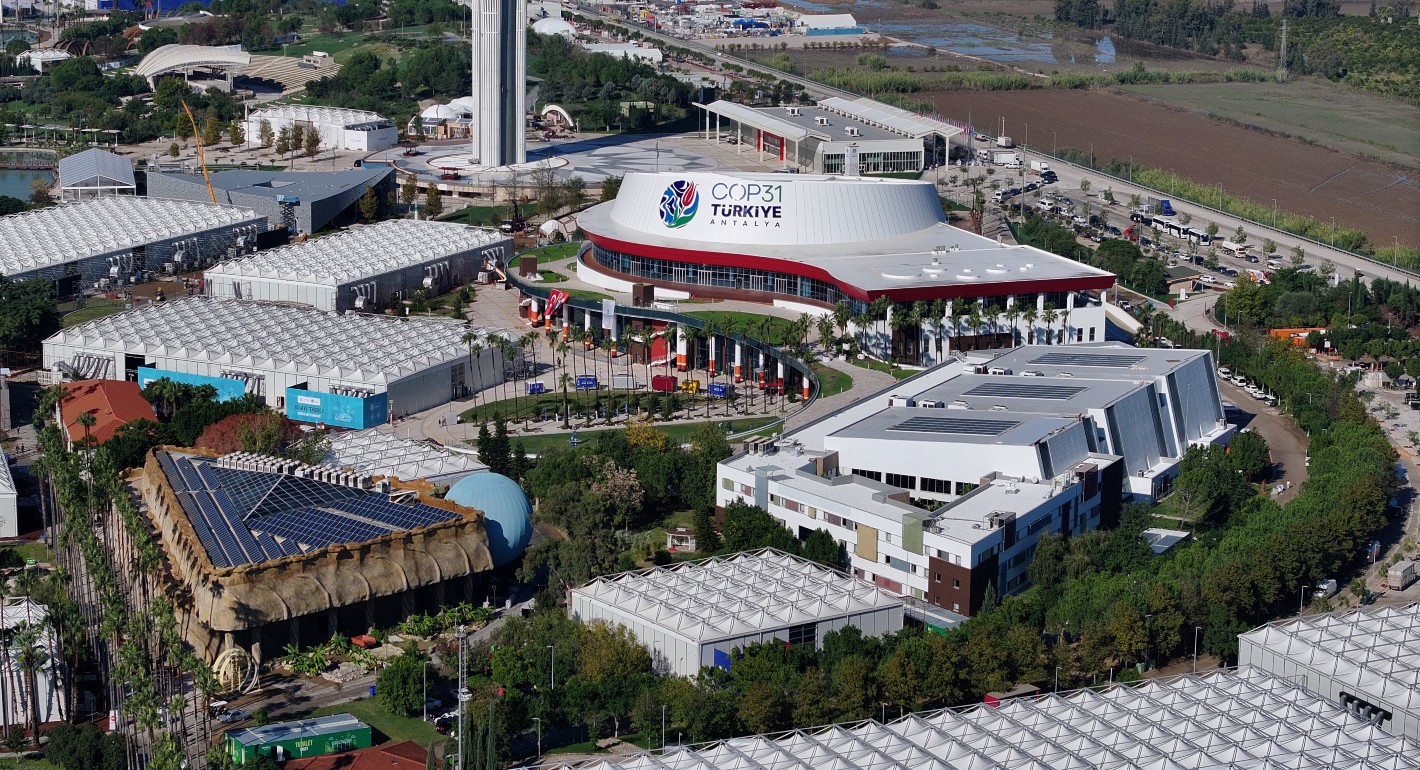
The COP31 venue in Antalya, Turkey, on October 30, 2026. (Photo by Orhan Cicek/Anadolu via Getty Images)
As the United States exits UN climate efforts, these smaller and less formal groupings will take on greater significance in global climate governance.
On November 9, delegates from nearly 200 nations will meet in Antalya, Türkiye, for the annual UN climate conference, COP31. They will gather for the last time before the United States becomes the first country to leave the UN Framework Convention on Climate Change (UNFCCC)—the 1992 treaty that underpins climate diplomacy—and the only one left outside. Previous U.S. presidents have denounced landmark accords, notably the Kyoto Protocol in 2001, but none abandoned the convention beneath them. Now, the country that has polluted the atmosphere more than any other, and that produces more oil and gas than any other, is backing out of not just a deal but the multilateral framework for making any deal at all.
This refusal of even the premise of global cooperation comes at a perilous moment. In October, UN experts judged that breaching the 1.5 degree Celsius threshold set under the Paris Agreement in 2015 is now “imminent and unavoidable.” Few governments are rallying, and in January 2025 the United States repudiated the Paris Agreement altogether. Warming at this pace will push some 2 billion people beyond the temperatures in which humans have historically lived, expose tens of millions to coastal flooding, and force tens of millions more from their homes.
Even so, little may be lost from this untimely departure. No one else is following America out of the convention, and some argue that a future president could rejoin as easily as President Donald Trump withdrew, because the Senate’s original consent still stands. Until then, the burden falls on a vanguard of nations to do what the lumbering United Nations cannot: to pioneer ambitious action. The success of such coalitions and clubs depends on how well they withstand duress, as the United States moves from politely shirking its duty to brashly spoiling their endeavors.
Deserting the UNFCCC, set for February 2027, is a formality. Last year, the United States sent no delegation to COP30 in Belém, Brazil; stopped paying its dues, about a fifth of the convention’s core budget; and rescinded $4 billion in pledges to the largest multilateral fund for climate projects in developing countries. The intent was clear even earlier: In 2017, during his first term, Trump considered withdrawal from the UNFCCC before he announced the first U.S. exit from the Paris Agreement, and Project 2025, the blueprint for a second Trump term, called for junking the convention as “inimical to the prosperity of the United States.”
The standard model of climate cooperation, which treats emissions cuts as a global public good, predicts that when one party’s cheating goes unpunished, others will realize that they, too, can free ride. Yet no other country has taken the Trump administration’s dumping of “radical climate policies” as a cue to do the same. In fact, neither the UNFCCC nor the Paris Agreement enforces any cuts, so quitting them frees a country from almost no obligation while forfeiting a seat at the table where the targets are set. The one leader tempted, President Javier Milei of Argentina, has so far held back, as the cost of leaving would come due under a trade deal with a strong club of climate-committed countries: the European Union tied its agreement with Mercosur, Argentina’s South American bloc, to staying in the Paris Agreement.
While the annual COP summit still draws the lion’s share of media attention and commentary, governing increasingly happens in focused, minilateral groups, alongside or entirely apart from that universal forum—comprising a “varied array of narrowly-focused regulatory regimes.” There are two main types of groupings: coalitions, where countries are each better off contributing on their own, so agreement is loose and informal, and clubs, where at least one member is better off withholding their contribution, so agreement requires binding commitments tied to receiving the benefits of cooperation. In the eight years after Paris, such small groups multiplied fivefold.
Most are coalitions, setting goals and sharing lessons, such as the Global Methane Pledge, the Powering Past Coal Alliance, and, among private actors, the now-defunct Net-Zero Banking Alliance. The G7’s hollow Climate Club, like these, has no punitive measures after Germany’s pitch for a common carbon price and border tax collapsed. A few, however, are clubs in more than name, punishing defectors or outsiders with fines or trade restrictions, such as in the Kigali Amendment to the Montreal Protocol and, among subnational actors across borders, California and Québec’s cap-and-trade system, which Washington state is set to join. The clearest example is the European Union, whose market now comes with a charge on carbon-heavy imports.
The choice between coalition and club comes with trade-offs. To ensure legitimacy, coalitions are open, often decide by unanimity, and ask little of their members, which makes them easy to form but easy to block—a flaw the UNFCCC shares. To act boldly, clubs are closed, often decide by majority, and ask much of their members, which makes them hard to block but hard to form. COP30 President André Corrêa do Lago acknowledged the virtues of each form of cooperation, advising countries to work at “two complementary speeds,” through broad consensus that is “deliberative and slow by design” to set a legitimate target, and through narrow groups to get there.
A country’s commitment to a coalition or club lasts only as long as its support at home. In democracies, that support depends on a contest between those who profit from pollution, such as oil and gas producers, and those who gain from cutting emissions or suffer from them, such as clean-energy manufacturers and coastal property owners. That contest explains the Trump administration’s strategy: by backing the polluters abroad, it can unmake climate commitments where they were made.
The United States increasingly prefers spoiling, preventing others from paying their share, to shirking, merely refusing to pay its own. The de facto U.S. exit from the UN climate regime last year removed a member that sometimes haggled to shirk its share, but it did not ease talks. Rather, the next holdouts in line just stepped up, exploiting consensus rules to obstruct cuts even without the United States. Seeing little point in scuttling a ship already aground, the Trump administration is turning to press the clubs whose commitments actually bind American corporations.
The U.S. government is intervening in the strongest climate club, the EU, by “cultivating resistance to Europe’s current trajectory within European nations,” as outlined in the 2025 National Security Strategy. This year, the State Department offered nearly $5 million in grants to European groups contesting “supranational bureaucratic overreach,” which covers climate regulation. Leaning on European governments is neither new nor partisan, but no recent presidency has done so as broadly or as brazenly as this one. In 2012, President Barack Obama’s administration urged the EU to suspend carbon charges on international flights and channeled the dispute toward a multilateral deal. Now, the Trump administration is holding up multilateral deals, including a carbon price on shipping, by threatening sanctions, visa restrictions, and port fees. The White House found ready allies in Greece and Cyprus, home to two of Europe’s largest shipping fleets, in a vote last year to postpone any deal. Headlines about American retreat from multilateralism are a sideshow to the United States’s spoiling from within.
Brandishing Europe’s reliance on U.S. energy, the Trump administration has bent but not broken the EU as a climate club. The August 2025 U.S.-EU trade framework tied a European pledge to buy $750 billion of U.S. energy to promises to address American concerns about the carbon-border adjustment mechanism, deforestation regulation, and corporate sustainability due-diligence directive (CSDDD). Those rules have given way only where domestic lobbying strained them before U.S. interference stressed them further.
Against the CSDDD, the United States worked alongside American companies operating within EU member states. A European Commission official described “direct calls from the American ambassador and other U.S. agencies” intent “on killing the directive.” In 2025, a handful of firms, including Chevron, ExxonMobil, and Koch, assigned themselves to lobby specific governments in order to “divide and conquer in the Council” and kept “close ties” with U.S. diplomats. In February 2026, the EU adopted a revised, much narrower CSDDD. “The wish list of American oil majors has been copy-pasted by the Commission,” said Lara Wolters, the European parliamentarian who led the original law.
Against the EU’s methane rule for imports, the United States worked through the EU members leading the resistance. As one U.S. oil executive explained: “It’s only when we couldn’t make any progress there that we turned more towards the [Trump] administration to say, ‘Can you help us?’” In the spring, U.S. cabinet officials discussed the rule with ministers from Czechia and Slovakia, and over the summer, U.S. diplomats raised the issue with senior officials from Austria and Germany, which then joined the opposition. In July, a German nonprofit reported that every U.S. embassy in Europe had been instructed to lobby for the rule’s abolition. In October, the European Parliament voted to delay the import requirements by three years, “bowing to pressure from the fossil fuel lobby and blackmailing from the Trump administration,” according to Jutta Paulus, a lead negotiator on the rule.
Under U.S. pressure, the club’s rules have only bent—being diluted or delayed. Coalitions, in contrast, break easily because defection costs little. Private coalitions are the extreme case: nothing binds members, and U.S. legal reach lets opponents raise the cost of staying for any firm with large American operations. In 2022, nineteen state attorneys general began investigating the six U.S. banks in the Net-Zero Banking Alliance. All six quit after Trump’s reelection, and the remaining members dropped the alliance’s 1.5 degree Celsius requirement to stem the exodus, but the coalition disbanded in October 2025 anyway. The Global Methane Pledge, another fragile coalition, launched by the United States and the EU in 2021, will likely outlast a White House that dismantles its own methane rules, but not one that turns to spoil the pledge itself.
This is the paradox of club cooperation: enforcement makes a group strong but also creates internal losers that external spoilers can employ. A binding rule is most at risk when it concentrates costs on organized groups and spreads benefits thinly, and safest when the winners are organized too.
COP31, and the annual conferences that follow, will likely reinforce the centrality of coalitions and clubs in global climate governance. The EU will be among the most central, making rules its trading partners must accept to access its market. But any group of countries able to commit credibly, despite opposition at home, can form a club to hold one another to those commitments. The growing agency of “middle powers” in Europe and across the Global South may sustain multilateralism despite superpower abdication or obstruction, but their clubs remain assailable by divide-and-conquer tactics.
What makes clubs resilient—their binding rules—also makes them vulnerable. International regimes rarely collapse when a great power defects, as the UNFCCC shows, but they do erode when one plays spoiler. Clubs will persist only where the winners of climate policy compensate its losers, across the club and within its members, and they need to pay up before the United States starts funding their opponents.
The latest from Carnegie scholars on the world’s most pressing challenges, delivered to your inbox.
Theodore Zaritsky
James C. Gaither Junior Fellow, Global Order and Institutions Program
Theodore Zaritsky is a James C. Gaither Junior Fellow in the Carnegie Global Order and Institutions Program.
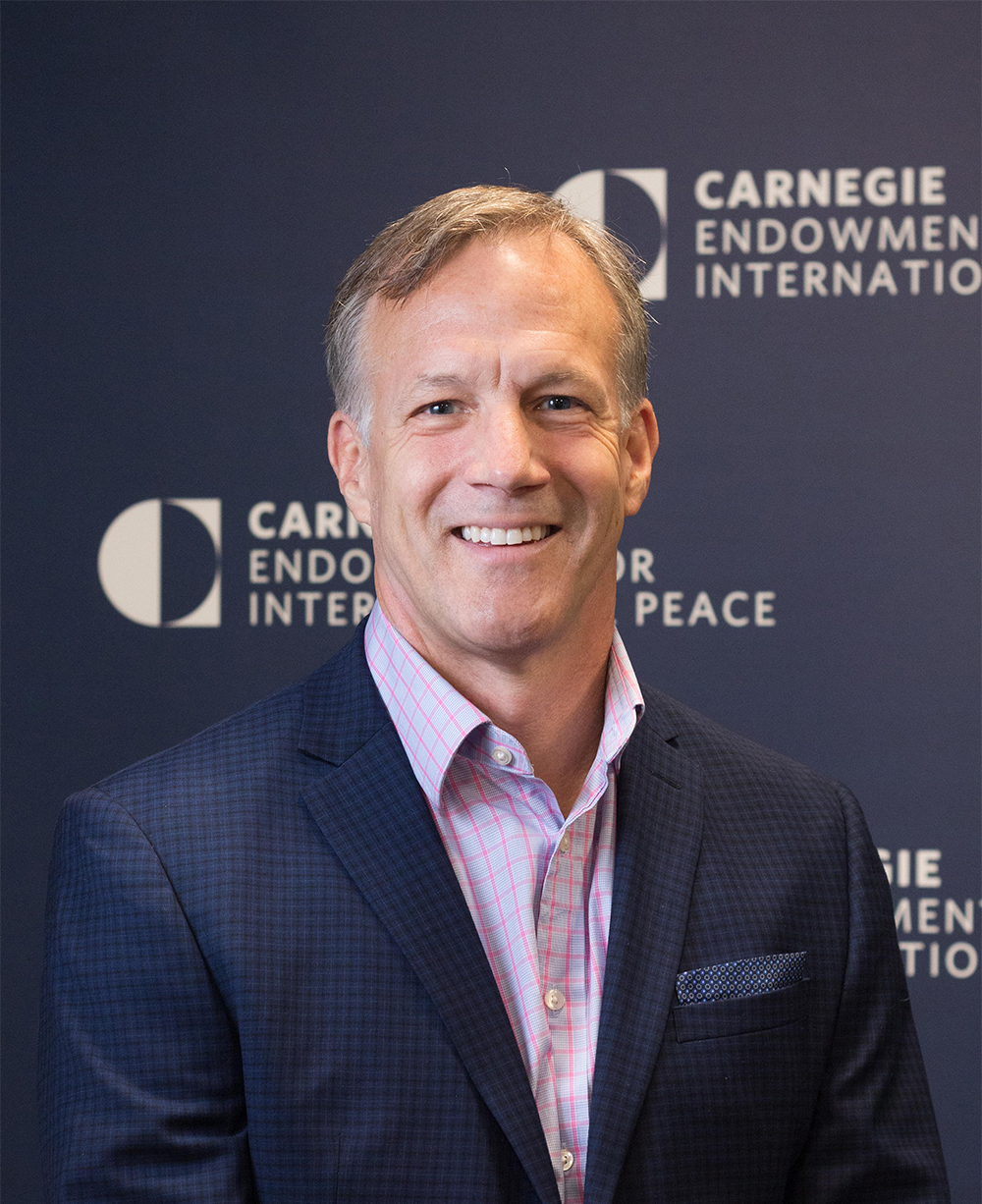
Senior Fellow and Director, Global Order and Institutions Program
Stewart Patrick is a senior fellow and director of the Global Order and Institutions Program at the Carnegie Endowment for International Peace. His primary areas of research focus are the shifting foundations of world order, the future of American internationalism, and the requirements for effective multilateral cooperation on transnational challenges.
Carnegie does not take institutional positions on public policy issues; the views represented herein are those of the author(s) and do not necessarily reflect the views of Carnegie, its staff, or its trustees.
The acknowledgment has sparked fears of a new arms race with China and Russia.

Chris O’Meara
Why governance of rapidly evolving technology will be distributed and complex.

Stewart Patrick, Scott Singer
Washington’s decision to support some UN functions while letting others wither is pulling the organization apart at the seams.
Stewart Patrick, Theodore Zaritsky

The move is an escalation of its war on multilateralism.
Stewart Patrick
And how they can respond.


Sophia Besch, Steve Feldstein, Stewart Patrick, …