

Commentary
- +1
Miloš Pavković, Fitim Gashi, Iliriana Gjoni, …
{
  "authors": [
    "Iliriana Gjoni"
  ],
  "type": "commentary",
  "blog": "Strategic Europe",
  "centerAffiliationAll": "",
  "centers": [
    "Carnegie Endowment for International Peace",
    "Carnegie Europe"
  ],
  "collections": [
    "EU Integration and Enlargement"
  ],
  "englishNewsletterAll": "",
  "nonEnglishNewsletterAll": "",
  "primaryCenter": "Carnegie Europe",
  "programAffiliation": "",
  "regions": [
    "Western Balkans",
    "Europe",
    "Ukraine",
    "Moldova"
  ],
  "topics": [
    "Political Reform",
    "Democracy",
    "Civil Society",
    "EU"
  ]
}
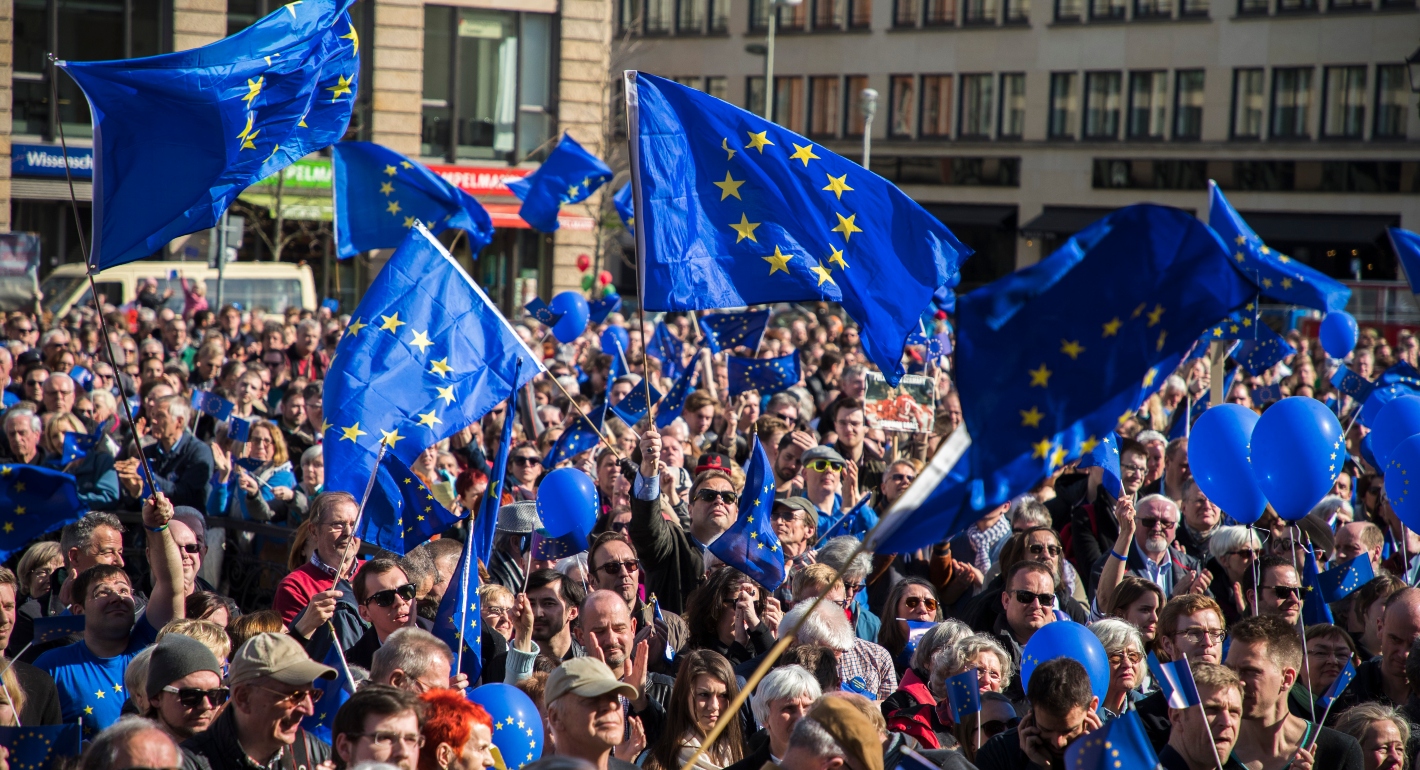
Source: Getty
Preparing candidate countries for EU membership is no longer enough. As the enlargement process becomes a reality, the union must also prepare its own societies.
The EU’s next enlargement may increasingly depend not only on how prepared candidate countries are to join the bloc, but on political and societal dynamics inside the union itself.
Russia’s war against Ukraine has transformed enlargement from a distant aspiration into a strategic necessity. Membership for countries such as Ukraine and Moldova has returned to the center of political debate, while reform momentum in the Western Balkans has picked up, reopening questions that, until recently, seemed politically dormant. Albania’s recent fulfilment of key interim accession benchmarks and Montenegro’s preparations for an accession treaty suggest that, for some countries, enlargement is becoming practical, not theoretical.
For decades, the EU has invested heavily in preparing candidates for accession: It helped them reform institutions, align laws, strengthen governance, and adopt common standards. Enlargement policy still assumes that if candidates are ready, political assent within the union will surely follow.
Increasingly, this assumption no longer holds. Accession ultimately depends on political approval inside member states, where governments are shaped by party politics, public opinion, and broader societal attitudes. The challenge is not simply that member states can block enlargement—that has always been true. It is that political support becomes more fragile when citizens remain only marginally familiar with countries they may soon share institutions with.
Today, EU enlargement no longer benefits from the permissive consensus that accompanied post–Cold War integration. Instead, it is the go-to scapegoat for all the ills of member states. What’s more, enlargement takes place amid geopolitical insecurity, migration anxieties, democratic backsliding, economic uncertainty, and declining trust in institutions. Public support for enlargement does exist, but it remains shallow, conditional, and vulnerable to domestic political contestation.
The result is a dual legitimacy challenge. In candidate countries, waiting years for progress has weakened confidence in the fairness and credibility of accession. In member states, enlargement risks becoming politically fragile when future members remain distant abstractions.
Europe has confronted similar dilemmas before.
In the decades following the Second World War, integration was never treated as a purely institutional exercise. Policymakers understood that reconciliation—most notably between France and Germany—required more than treaties. It depended on societal familiarity. Town twinning, youth exchanges, educational partnerships, and repeated contact between future generations helped create habits of coexistence long before political integration deepened.
Europe did not simply prepare states for integration. It prepared societies for living together.
Many of these instruments already exist today. Programs such as Erasmus+, the European Solidarity Corps, municipal partnerships, and youth initiatives already seek to bring candidate countries closer to the union, albeit unevenly. The European Commission increasingly recognizes that while candidates must prepare for membership, Europeans must adapt to welcome a larger family.
The challenge is not the absence of instruments but the absence of strategy. Existing initiatives remain fragmented, weakly coordinated, and only loosely connected to enlargement politics itself. Much of the emphasis is still given to communication: explaining why enlargement matters, countering disinformation, or making the geopolitical case for accession. These efforts matter. But informing societies about an enlargement that remains largely abstract is not the same as preparing them for the reality of membership.
Political legitimacy requires familiarity. Citizens are more likely to support what they recognize and understand: The more candidate countries are part of public debate and the fabric of life in member states, the more likely they are to be seen as coequal partners.
Thankfully this process is already beginning. Albania’s rise as a tourist destination has increased societal exposure to a country once largely absent from the European imagination.
But if institutional preparedness has long served as one pillar of enlargement, the EU may now need a complementary pillar focused on societal preparedness inside member states. As candidate countries move through benchmarks, negotiation stages, and closing conditions, societal preparedness inside the union should deepen alongside.
Not all candidate countries are on the same timeline. Consequently, Europe’s approach to familiarization should reflect this reality. As negotiations deepen and accession becomes more plausible, candidate countries should become increasingly visible.
For countries approaching membership in the coming years, member states and EU institutions should prioritize partnerships between public broadcasters, municipal cooperation, journalist and school exchanges, and cultural programming that bring candidate countries into everyday public life.
The objective should not be to bypass democratic deliberation. Efforts perceived as manufacturing consent would likely provoke backlash. The aim is narrower and more democratic: Ensuring political debate unfolds under conditions of familiarity rather than abstraction.
This matters because earlier enlargements sometimes created a perception that integration had unfolded around citizens rather than with them. Following the 2004 round, concerns in several member states fed into broader political anxieties, particularly during constitutional debates in France and the Netherlands. Future enlargement is unlikely to succeed politically if citizens experience is as a fait accompli.
For countries with longer journeys ahead, such as Ukraine, existing mobility programs should place greater emphasis on reciprocal exposure. Enlargement remains a largely one-way socialization process: candidates are expected to learn Europe, while Europeans themselves are only marginally exposed to candidate. Erasmus+ could establish enlargement-focused tracks prioritizing study, traineeships, and student exchanges, while the European Solidarity Corps could expand volunteering placements in municipalities, schools, local media, and civic projects. Political legitimacy is more likely to endure when familiarity flows in both directions.
Finally, this exposure should increasingly be linked to opportunity, making expertise on candidate countries professionally valuable across sectors. The more citizens see meaningful educational and career pathways connected to enlargement, the more naturally candidate countries will be understood as part of Europe’s future.
Europe once understood that political integration required proactive societal preparation alongside institutional change. Enlargement today needs that same instinct—not by inventing entirely new institutions, but by using existing ones more deliberately.
The EU has spent decades preparing candidate countries for accession. But for the next enlargement to be a success, it needs to prepare itself.
Subscribe to Strategic Europe, delivered every Tuesday and Thursday!
This commentary draws on research supported by the 2025 Postgraduate Vibeke Sørensen Grant, awarded to the author by the Historical Archives of the European Union at the European University Institute. The author would like to thank Elise Cuny for her research assistance.

Research Analyst, Carnegie Europe
Iliriana Gjoni is a research analyst at Carnegie Europe, where she focuses on EU enlargement and Western Balkan politics.
Recent Work

Miloš Pavković, Fitim Gashi, Iliriana Gjoni, …

Dimitar Bechev, Iliriana Gjoni
Carnegie does not take institutional positions on public policy issues; the views represented herein are those of the author(s) and do not necessarily reflect the views of Carnegie, its staff, or its trustees.
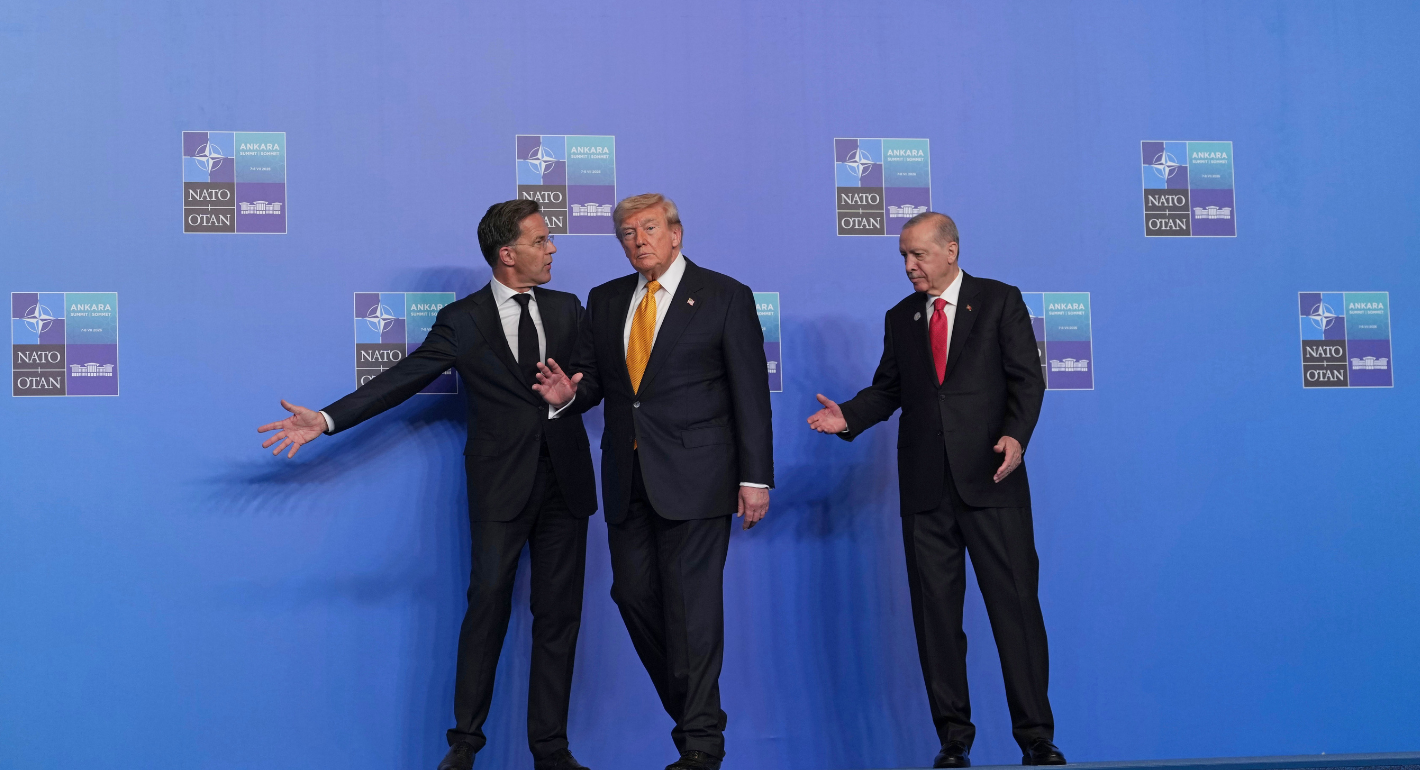
Nearly a year and a half after Europeans leaned into sucking up to Trump, the strategy has produced some benefits when it comes to Ukraine.

Rym Momtaz
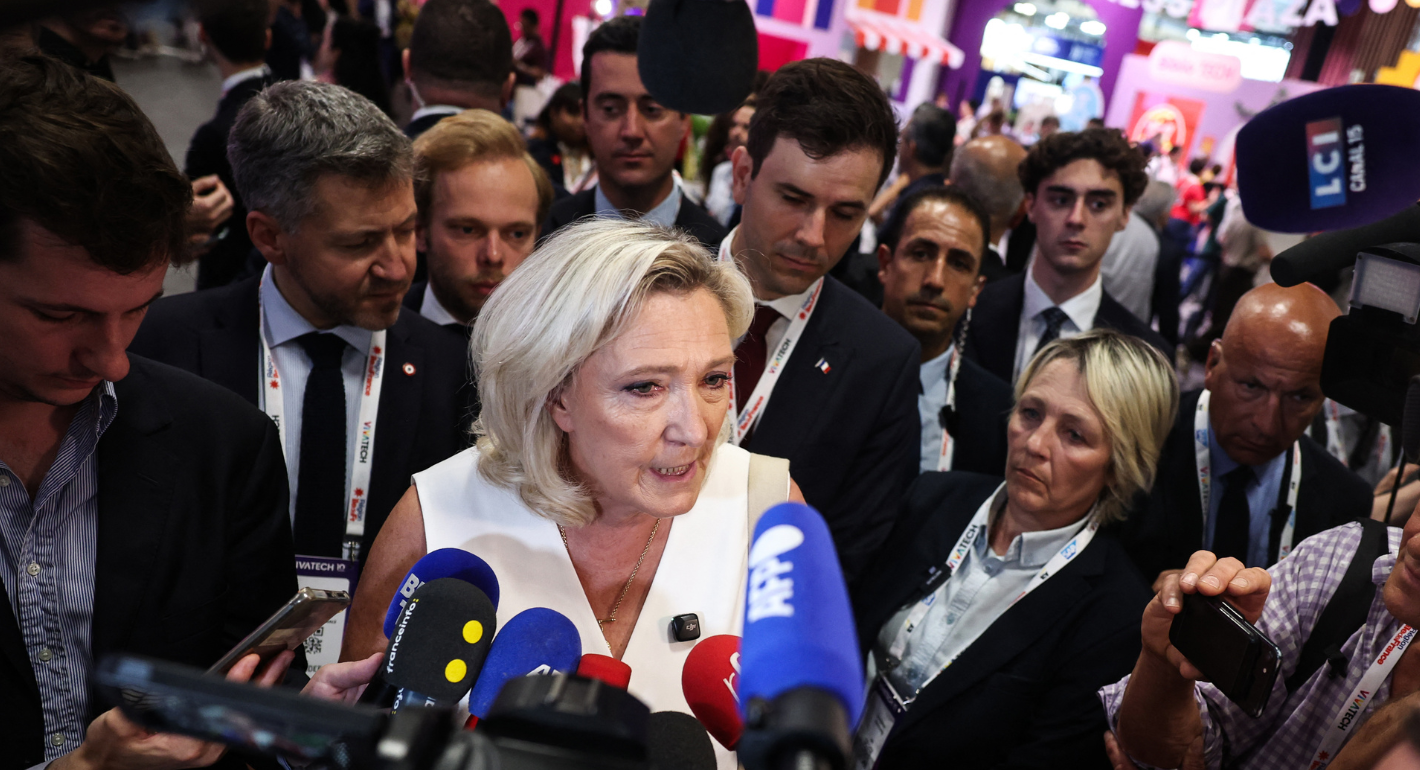
Far-right leader Marine Le Pen can—and will—run in France’s next presidential election. What does the outcome of her appeal against a 2025 embezzlement conviction mean for the country’s political future?

Catherine Fieschi
While Russia is not ready to sue for peace on Europe’s terms, it could still either seek a ceasefire in Ukraine or try escalation. Brussels needs to prepare for both and prioritize that preparation over normative discussions.
Kadri Liik
When Giorgia Meloni very publicly rebuked Donald Trump’s disparaging remarks about her, it surprised many who saw her as a European extension of Trumpism. Is the spat a sign of trouble in the radical right’s transatlantic axis?
Rym Momtaz, ed.

Western Europe’s dual-use infrastructure melted down during its latest heat wave. If a predicted hot weather event can take the continent by surprise, what chance does it have to withstand unexpected geopolitical crises?
Rym Momtaz