

Commentary
Are Germany’s economic, industrial, and political struggles becoming a liability for the EU’s ability to rise to the geopolitical moment?
{
  "authors": [
    "Rym Momtaz"
  ],
  "type": "commentary",
  "blog": "Strategic Europe",
  "centerAffiliationAll": "",
  "centers": [
    "Carnegie Endowment for International Peace",
    "Carnegie Europe"
  ],
  "englishNewsletterAll": "",
  "nonEnglishNewsletterAll": "",
  "primaryCenter": "Carnegie Europe",
  "programAffiliation": "",
  "regions": [
    "Europe",
    "France"
  ],
  "topics": [
    "EU",
    "Foreign Policy",
    "Domestic Politics",
    "Economy",
    "Security"
  ]
}
Source: Getty
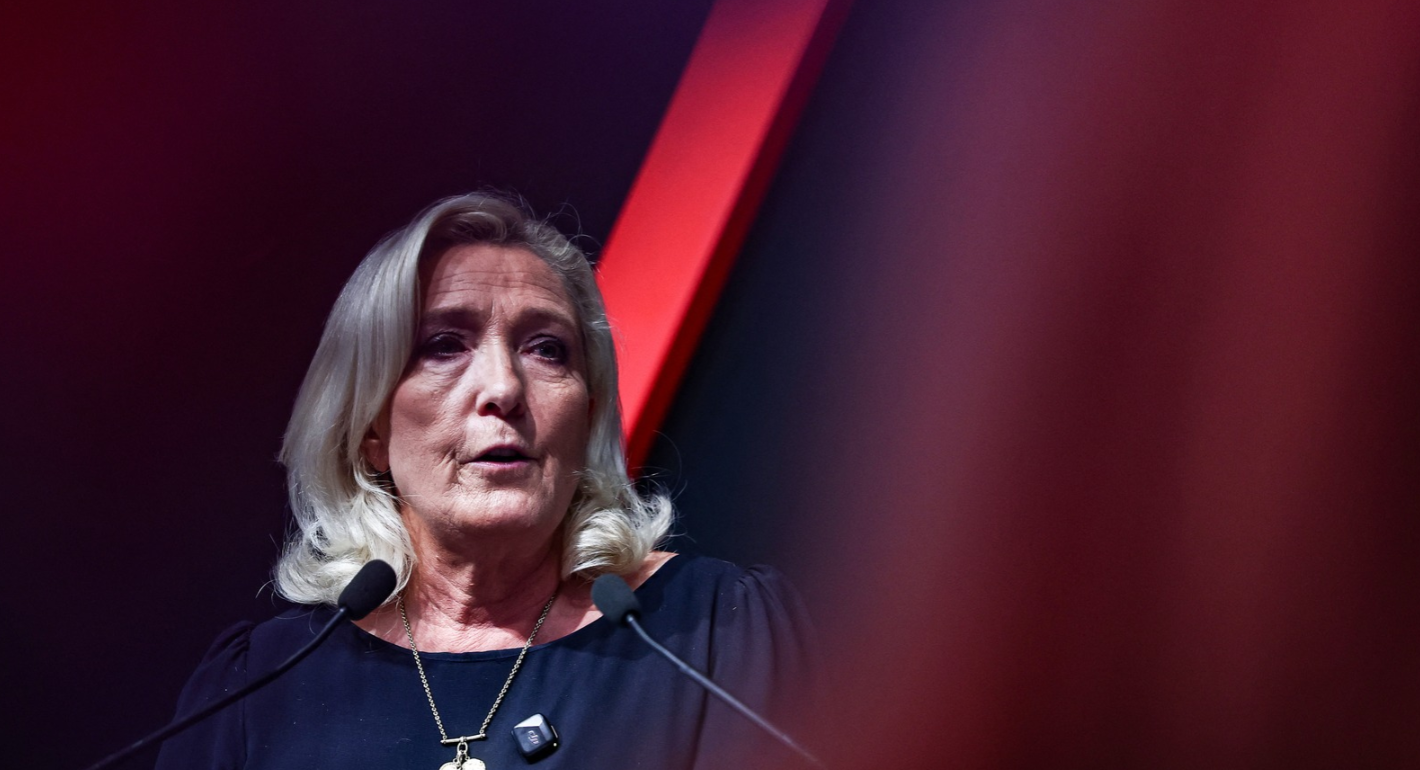
With its public finances in shambles, the far right polling at 35 percent ahead of the 2027 presidential election, and a growing protest movement, is France’s crisis a threat to the EU’s geopolitical awakening?
Director, Trade and Economic Security Program, Jacques Delors Institute
With two populist parties, the National Rally (RN) and France Unbowed, leading the race for the 2027 French presidential election, the outlook for restoring the country’s public finances is bleak. Moreover, on its contribution to the EU budget, both parties are calling for outright disobedience. For the radical-right RN, which currently leads the polls, the trajectory is striking, from the so-called Frexit narrative of 2017, to the 2022 promise to reform the EU from within, to a 2027 agenda that amounts to stopping the union in its tracks.
This retreat from Europe would play straight into the hands of Russia, China, and the United States, who all stand to gain from a fragmented EU. And it would come at the worst possible moment, just as the second China shock demands an urgent deepening of the single market and strong cohesion to reduce our dependence on Beijing.
The twenty-seven EU countries have six months left to accelerate their agenda.
What is not achieved now may be lost—and if France goes under, it risks dragging the union down with it.
Senior Associate Fellow, German Council on Foreign Relations (DGAP)
Europe has a France problem.
The country’s fiscal woes have only just started, and they could shake Europe to its core in the coming months. This will demand an adjustment of historic proportions at a time when politics remains profoundly polarized and where consensus on the need for consolidation is limited.
On top of that, the conventional wisdom in most financial circles is that the election of RN presidential candidate Marine Le Pen would not be a major event. But the reality is that she has made the question of France’s contribution to the EU budget and support for Ukraine central points of her oppositional posture. Unlike Italy under Prime Minister Giorgia Meloni, France is a net contributor to the union’s budget and can therefore be a bigger challenge. Many hope that Le Pen would be forced to govern with the center right, that she would be constrained by financial markets and the country’s high level of debt, and that she would eventually turn out to be a French Meloni.
But she is set to be a much bigger challenge for the EU’s outlook than currently imagined.
Visiting Scholar, Europe Program, Carnegie Endowment for International Peace
No, the issues France is dealing with are a sign of the debate that Europe’s geopolitical awakening entails.
Massive protests over budget issues show a lively democracy grappling with the question that many Europeans are also dwelling on: How can countries make sure to provide their societies with adequate social services at a time where there is a war at the union’s borders and the United States’ interest in protecting Europe is decreasing.
The far right’s answer to this question is to push back against European integration, but that does not necessarily hinder the EU’s geopolitical awakening. That has already happened across the union, as a result both of the war in Ukraine and of the current U.S. administration’s posture toward Brussels. For the RN, national sovereignty—which is linked to geopolitical awakening—is a key issue and, in fact, its position on Russia has evolved toward a more critical stance. Moreover, the party does not seem interested in cutting France’s defense budget.
Nevertheless, it is true that a far-right government in Paris will deprive the EU of creativity and vision for the future of European sovereignty and integration, and other countries will need to step up.
Research Coordinator, Italian Institute for International Affairs (IAI)
Yes, Europe does have a France problem.
If Marine Le Pen wins the presidency, the impact on the EU could be massive. Absent significant adjustments, France’s strained finances could trigger a new sovereign debt crisis in Europe. With discontent mounting across generations ahead of the election, Le Pen will have little incentive to promise fiscal responsibility. Instead, she will argue that preserving France’s generous welfare system requires cuts to its international commitments: to the EU budget and electricity market on the grounds that its common pricing mechanism makes the French pay more, and to defense spending or, at least, support for Ukraine, which has never been particularly popular among her base.
This could not happen at a worse moment for Europe. France’s economy is so large that eurozone countries would struggle to contain the fallout. If Le Pen cuts France’s EU contribution, other countries may follow suit, severely reducing the bloc’s financial power. Reduced French support would weaken Ukraine’s defense, cast doubt on the continued flow of financial assistance, and likely block its accession process. A Le Pen-led France would also give momentum to other far-right forces, further fracturing the union and weakening the very idea of a united Europe.
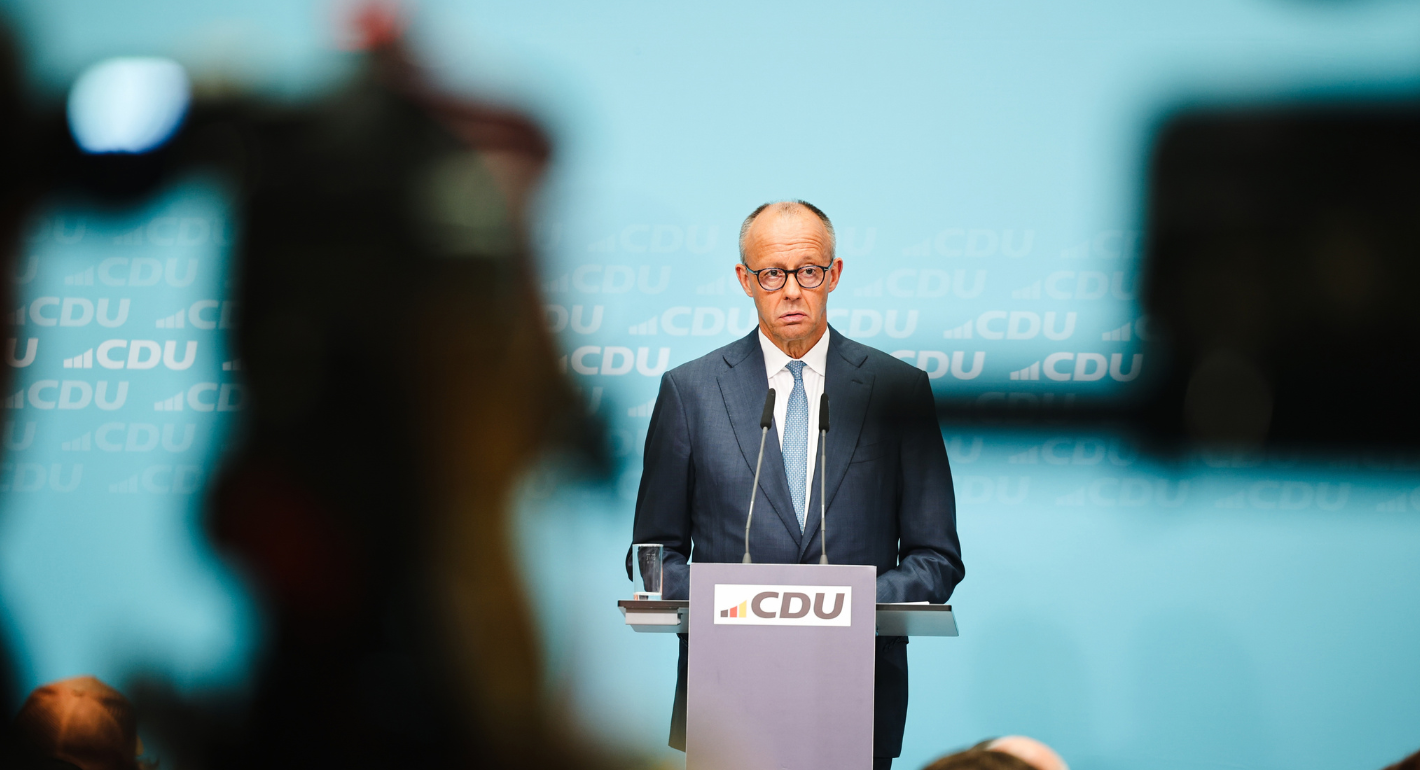
Are Germany’s economic, industrial, and political struggles becoming a liability for the EU’s ability to rise to the geopolitical moment?
Director, International Centre for Defence and Security (ICDS)
There is a real threat of the EU sinking into geopolitical irrelevance if Russia-friendly populists come to power in France and other member states. Security and democracy are closely intertwined on Europe’s geopolitical map.
The EU does not only have a France problem but also a broader problem with the rise of radical right and left, polarization, and low trust in democratic institutions.
Large parts of the population in western and southern member states feel no sense of ownership over the union’s geopolitical awakening. In a way, debate on the hardening geopolitical environment and Europe’s dire security situation reflects the malaise of European democracy: Mainstream political leaders agree that we are in serious trouble and need to wake up and take responsibility for our own security, but in many countries they have not been able or willing to convey this message to their electorate.
Geopolitics, especially when it comes to policies vis-à-vis Russia and Ukraine, divides the continent, with the northern part of Europe carrying a growing share of the security burden and getting increasingly frustrated with the southern part.
Senior Fellow, Centre for Eastern Studies (OSW)
Elements of the crisis that we are witnessing in France are also present in other member states and will reshape the EU for years to come. For reform of French public finances to be sustainable, it must be accompanied by growth driven by industrial production, which is currently being undermined by Chinese imports and high energy prices.
The French, as well as other European nations, have legitimate grievances against their political class and the EU’s establishment, which for years have delayed new investments in nuclear energy and pursued a naive trade and climate policy. One could also question whether some of Brussels’s decisions as part of its geopolitical awakening, such as trade agreements with India or Mercosur and their impact on agriculture, might further harm key social groups.
From the perspective of citizens in central Europe, the intensity of the violence surrounding protests in France only reinforces their prevailing belief that restrictive law enforcement, migration, and assimilation policy is necessary.
The election of Marine Le Pen as president of France would complicate the coordination of EU policy toward Russia and Ukraine. However, her latest declarations can give us hope that good bilateral relations can be maintained and that positions can converge on deterring the Kremlin’s aggressive policies.
Head of EU/Europe Research Division, German Institute for International and Security Affairs (SWP)
The decline and fragmentation of the political center in France is a symptom of a wider political malaise weakening Europe. Two dynamics reinforce each other: The first is democratic mistrust. European governments can no longer trust that their partners might not turn illiberal at the next election. How much could a French nuclear guarantee be trusted if Le Pen becomes the next president? How about German rearmament if the Alternative for Germany were to enter government? Will Poland continue to support Ukraine after its next election?
The second is the uploading of national internal pressure and polarization to the European level. The EU is a compromise machine, but for that machine to work, it relies on governments seeking win-win compromises. National populists like Le Pen, who view politics as a winner-take-all, zero-sum game have little interest in compromise if their side does not win. A dramatic reduction in the French contribution to the EU budget is her early target.
In combination, willingness among EU member states both to trust each other and to compromise is eroding, pushing countries to seek national solutions and weakening the foundation of joint action when it is most needed.
Subscribe to Strategic Europe, delivered every Tuesday and Thursday!
Contributors Elvire Fabry and Riccardo Alcaro acknowledge the use of Claude and ChatGPT in the production of their responses to proofread earlier drafts. Contributor Lukasz Maslanka acknowledges the use of ChatGPT in the production of his response to translate from Polish to English and to proofread an earlier draft. The writing, argument, and analysis are entirely the contributors’ own.

Editor in Chief, Strategic Europe
Rym Momtaz is the editor in chief of Carnegie Europe’s blog Strategic Europe. A multiple Emmy award-winning journalist-turned-analyst, she specializes in Europe and the Middle East and the interplay between those two spaces.
Recent Work
Rym Momtaz
Rym Momtaz, ed.
Carnegie does not take institutional positions on public policy issues; the views represented herein are those of the author(s) and do not necessarily reflect the views of Carnegie, its staff, or its trustees.

Ahead of a tough winter for Ukraine, Donald Trump’s swing back toward Russia bodes ill. But instead of panicking, Kyiv’s European allies are focusing on action.
Rym Momtaz
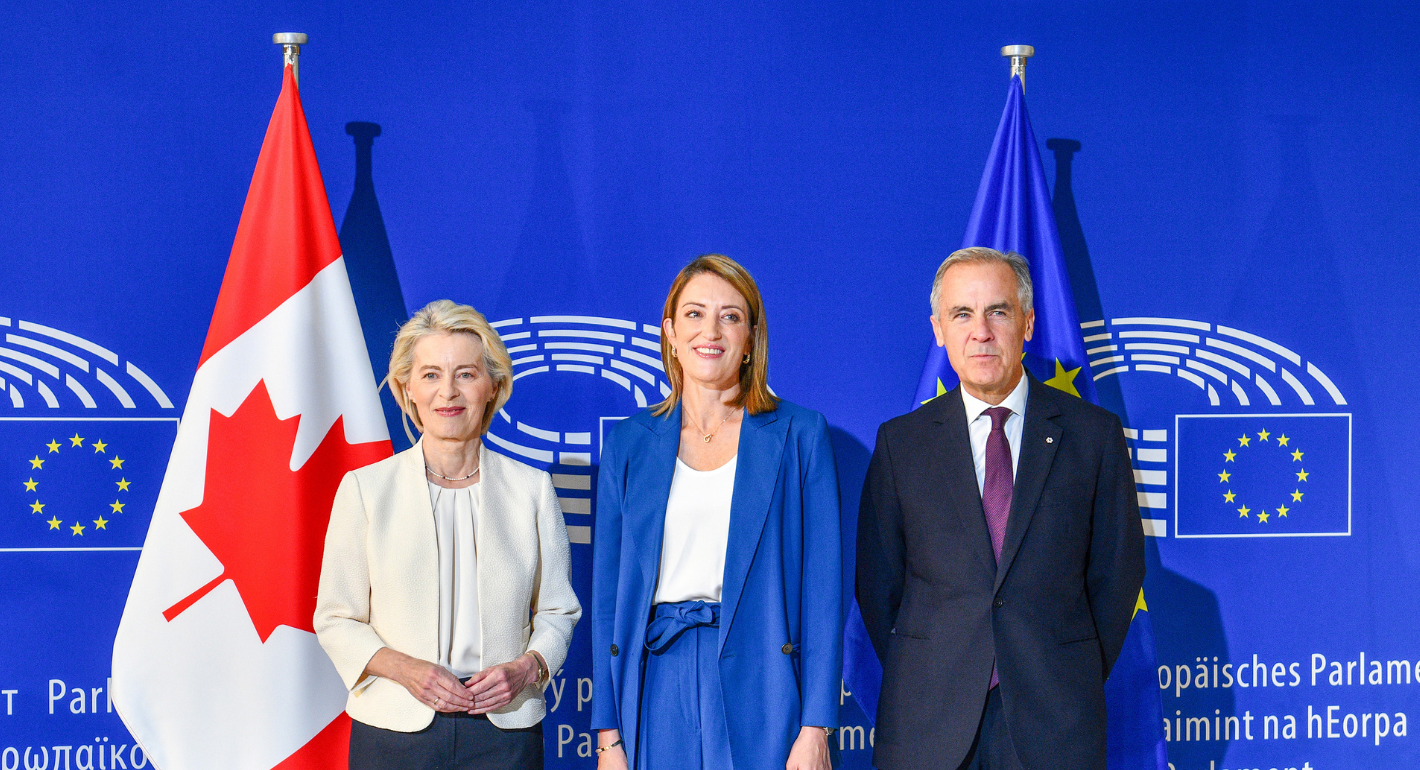
While the EU and European governments are embracing the much-lauded middle-power moment, this entails three difficult conundrums.

Richard Youngs
Much has been said of the changes Brussels is trying to make to the EU enlargement process. Here’s why gradual integration might—or might not—be the answer.

Dimitar Bechev
The European Commissioner for Trade is headed to China. But after President Xi’s bridge-building visit to Washington, can a more isolated EU overcome Beijing’s stranglehold on critical raw materials? Who will blink first?
Rym Momtaz, ed.
The domestic impacts of how long it is taking to end the war in Ukraine have pushed the French electorate to the political extremes and compromised the country’s diplomatic capacity.
Rym Momtaz