

Commentary
Rym Momtaz
{
  "authors": [
    "Rym Momtaz"
  ],
  "type": "commentary",
  "blog": "Strategic Europe",
  "centerAffiliationAll": "",
  "centers": [
    "Carnegie Endowment for International Peace",
    "Carnegie Europe"
  ],
  "englishNewsletterAll": "",
  "nonEnglishNewsletterAll": "",
  "primaryCenter": "Carnegie Europe",
  "programAffiliation": "",
  "regions": [
    "Europe",
    "Ukraine",
    "Russia"
  ],
  "topics": [
    "EU",
    "Foreign Policy",
    "Economy",
    "Security"
  ]
}
Source: Getty
A sizeable funding shortfall looks increasingly likely to hit Ukraine in 2027. Can the Europeans, with their strained budgets and economies, come up with the cash without seizing frozen Russian assets?
Professor of Financial Law, Durham University
The issue is not whether the EU could fund Ukraine without Russian assets, but whether it should. And it should not: Using the assets is a must. The main reason is geostrategic, in my view, and it has to do with the union’s need to become a credible and influential foreign policy actor—not only against Russia but also on the international stage.
Lacking a true common foreign and defense policy, the EU’s main geopolitical tool is its financial and economic power. Using frozen Russian central bank assets to fund Ukraine’s reconstruction would demonstrate that the EU can willingly and strategically deploy its economic might through financial warfare when needed.
The international law applicable to central bank reserves gives the EU, in my view, enough room for maneuver if it indeed decided to seize Russian assets. Whether it should simply set up a mechanism to use the income from interest payments from the current assets or go for a full confiscation is a different question involving different legal and political issues. But the fundamental point is that Brussels should demonstrate its economic power and financial warfare capabilities, and show itself as a credible international actor in foreign policy.
Senior Fellow and Ukraine Initiative Director, Carnegie Endowment for International Peace
Europe has no choice but to find a way to keep Ukraine afloat without confiscating or transferring the immobilized Russian assets. For now, the political and legal hurdles to doing so are simply too large to overcome in a timeframe that would benefit Kyiv.
That said, Europeans can make use of the assets in their current state to mobilize additional funding packages. Writing for Carnegie Europe, Vladyslav Rashkovan and Gregory Wilson proposed two realistic options.
The first is to create another iteration of the $50 billion (€45 billion) Extraordinary Revenue Acceleration (ERA) loan, which the G7 designed in 2024 to be serviced by future expected revenues generated by the immobilized assets.
The second option is for the EU to repeat the example of the €90 billion ($100 billion) Ukraine Support Loan (USL) agreed in December 2025, which Kyiv is required to repay only if Russia pays reparations. The EU, for its part, has immobilized the assets indefinitely and reserved the right to use their cash balances to repay itself. Both an ERA 2.0 and a USL 2.0, Rashkovan and Wilson argue, would respond to Ukraine’s urgent needs while sidestepping a drawn-out battle over the legal status of the immobilized assets.
Senior Fellow, Bruegel
Using the Kiel Institute’s reference numbers, the EU and its member states provided €200 billion ($222 billion) to Ukraine between February 2022 and August 2026. This represents an annual average €44 billion ($49 billion), slightly under 0.25 percent of the EU’s GDP, a minor cost given the immense benefits of Ukraine’s staunch resistance to European security. Simultaneously, it makes a massive and probably vital difference for Ukraine, whose estimated GDP is tiny by comparison.
Russia’s sovereign assets held in Belgium by Euroclear are slightly under one percent of the EU’s GDP. Those immobilized elsewhere in the union are probably under €50 billion ($55 billion), and arguably harder to mobilize. The windfall profits from Russian reserves, which have been used as part of the bloc’s assistance to Ukraine, account for less than a fifth of that funding.
Even allowing for the rising expense of war, European citizens can easily keep giving Ukraine what it needs for less than half a percent of their annual GDP. This is eminently affordable, even with the current fiscal stress in some member states—it’s hard to think of better security value for money. A more assertive use of Russian immobilized assets would surely alleviate the effort, but is hardly indispensable.
Director, Security Studies Center, French Institute of International Relations (IFRI)
With a combined GDP above €22 trillion ($24 trillion), the EU, the UK, and Norway could easily cover Ukraine’s needs—their annual military expenditure of around €80–100 billion ($89–111 billion) represents less than 0.5 percent, after all. One could say that it is a modest price to pay.
Moreover, money spent for Ukraine is increasingly spent in Europe. The USL requires at least 65 percent European or Ukrainian content in defense purchases, which makes Kyiv a lever for Europe’s industrial ramp-up and for reducing its critical dependencies.
This has allowed widespread free-riding, notably in France and in southern Europe, where fiscal space is tighter or the Russian threat feels more distant. The real constraint is therefore political. Joint borrowing at least distributes the burden according to each member’s budgetary share.
Yet, the upcoming elections in France, Italy, and Spain could make governments unwilling to renew such instruments. I do not believe a financial cliff would be enough to end Ukrainian resistance, which is a matter of survival. But it would certainly turn a largely functioning wartime state into a fiscal black hole on Europe’s doorstep. Because Europe has tied its own fate to Ukraine, the partnership has become too big to be allowed to fail.
Senior Fellow for Russia and Eurasia, International Institute for Strategic Studies (IISS)
The EU budget dispute over additional funding for Ukraine is unnecessary and counterproductive. The union can easily find this money, and it serves fundamental security interests to do so.
Ukraine is not asking for scarce weapons, but for money to build its own. In doing so, it is both protecting Europe from Russia and developing technologies that Europe itself lacks and needs. The EU’s economy is, in turn, over ten times larger than Russia’s. The additional sum Ukraine is asking for amounts to less than 1 percent of total member state public spending. That’s a good bargain to defend the continent. The reluctant countries might reflect on the generosity of other member states in giving them structural funds and other fiscal transfers in recent decades, when the stakes did not include war.
Political divisions over a small sum will encourage Russian President Vladimir Putin in his view that Europe cannot sustain its resolve. This makes it even less likely that he will agree a compromise to end the war.
Choices must be weighed against their alternatives. The consequences of failing to support Ukraine would be dire. The EU cannot afford to not continue. These budget battles are bad economics, bad security, and bad politics.
Alternate Executive Director, International Monetary Fund
Ukraine has different types of needs: budgetary, military, humanitarian, energy, reconstruction, and so on. Each has its own sources of funding, from domestic revenues to immobilized Russian assets.
Additional budgetary financing either via an ERA 2.0 loan by the G7, repaid from revenues of the immobilized assets, or via an enlarged USL 2.0, repaid only when Russia pays reparations, are possible. Neither requires direct confiscation.
For military support, other mechanisms include the Prioritized Ukraine Requirements List (PURL), Security Action for Europe (SAFE), the so-called Danish model, the Czech ammunition initiative, the Build in Ukraine initiative, and the Drone Deal framework. Probably the cheapest additional euro is the one spent on Ukrainian defense factories, which also adds to the security of the EU and its allies, with their corporate taxes becoming another source of funding.
Reconstruction, including the new cities I think Ukraine should be building, is best funded by investments from Ukrainian and foreign companies that believe in the country’s European future. EU accession offers them a return on investment, which we have seen with countries like Poland in the past. That said, this would require war-risk insurance and reforms in Ukraine.
Still, the core principle remains: Russia must pay for the damage.
Whitney Shepardson Senior Fellow, Council on Foreign Relations
So, can the Europeans get it done without seizing the Russian assets?
Yes—the €90 billion ($99 billion) package from 2025 was funded with borrowed money and the EU could easily borrow another €70 billion ($77 billion). The annual budget cost is just the interest on the bonds.
But there is a more elegant solution. In total, the world has frozen around €250 billion ($274 billion) of Russian central bank assets with the vast majority frozen inside the EU. Those funds are just sitting in a deposit account, which is leaving several billion euros of potential interest revenue on the table. I would find a way to move the funds held by Euroclear in Belgium out, to reduce the country’s risk, and then invest the deposit account in a pool of euro area government bonds that would generate interest equal to the EU’s borrowing costs on the USL. That just replicates a standard reserve portfolio and doesn’t take any unusual risk. And the earnings on the frozen Russian assets, which aren’t legally owed to Russia right now, would fully cover the budget cost of an expanded loan to Ukraine.
Subscribe to Strategic Europe, delivered every Tuesday and Thursday!

Editor in Chief, Strategic Europe
Rym Momtaz is the editor in chief of Carnegie Europe’s blog Strategic Europe. A multiple Emmy award-winning journalist-turned-analyst, she specializes in Europe and the Middle East and the interplay between those two spaces.
Recent Work
Rym Momtaz
Rym Momtaz, ed.
A blue wave has swept over the U.S. midterms, with Democrats regaining control of both houses of Congress. But Europeans hoping for a return to business as usual should think again.
Rym Momtaz
In Germany, competing perceptions of Russia are highlighting a tension between public opinion and government policy. In the country’s east, where division is widespread, populist parties are taking advantage.

Gwendolyn Sasse
The European Commission is preparing the EU for its next enlargement. But member states need to make it a project that European citizens can understand, shape, and support.

Iliriana Gjoni
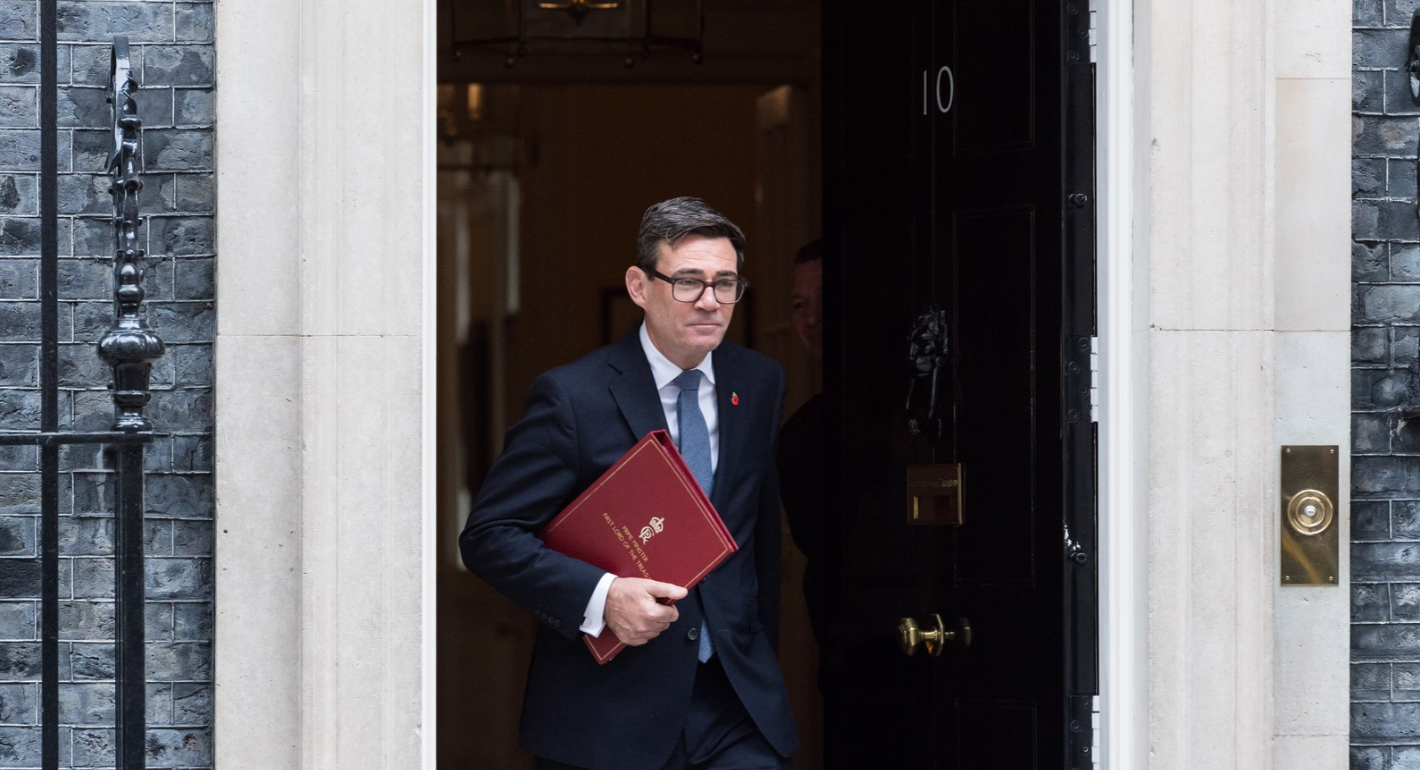
Resetting relations with the EU is a central plank of the UK’s current foreign policy. Is Andy Burnham being bold enough or is he falling into the same trap as his predecessors, misreading the power dynamic?
Rym Momtaz, ed.
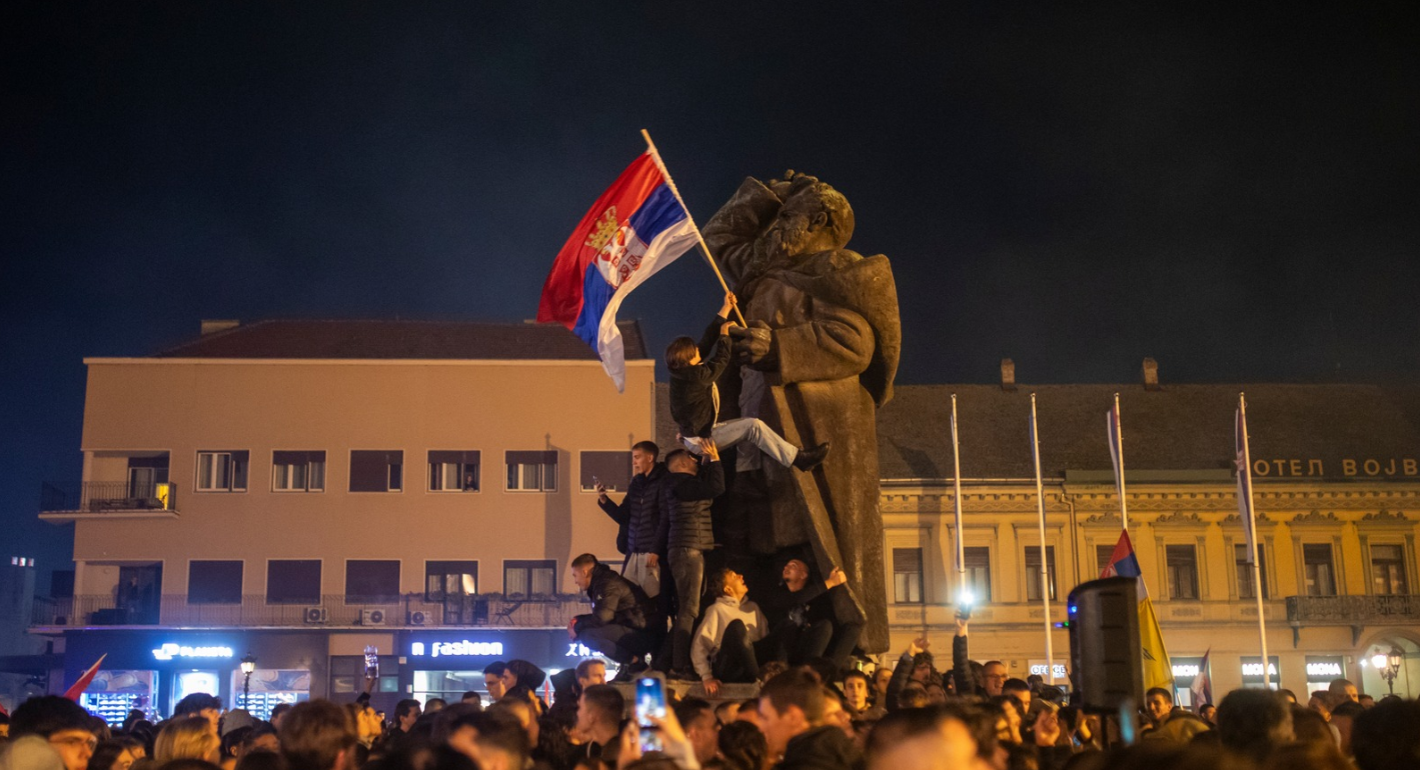
Excitement is in the air following Aleksandar Vučić’s defeat in Serbia. To build a truly democratic state, the movement that unseated the former president must learn from the mistakes of the past.

Ivan Vejvoda