• Research
  • Emissary
  • About
  • Experts
Carnegie Global logoCarnegie lettermark logo
DemocracyIran
  • Donate
Afghanistan: The Impossible Transition

Source: Getty

Paper

Afghanistan: The Impossible Transition

A combination of two critical problems threatens to undermine the mission of the United States–led coalition in Afghanistan: the failure of the counterinsurgency strategy and a disconnect between political objectives and military operations.

Link Copied
By Gilles Dorronsoro
Published on Jun 15, 2011

Additional Links

Full Text
Program mobile hero image

Program

South Asia

The South Asia Program informs policy debates relating to the region’s security, economy, and political development. From strategic competition in the Indo-Pacific to India’s internal dynamics and U.S. engagement with the region, the program offers in-depth, rigorous research and analysis on South Asia’s most critical challenges.

Learn More

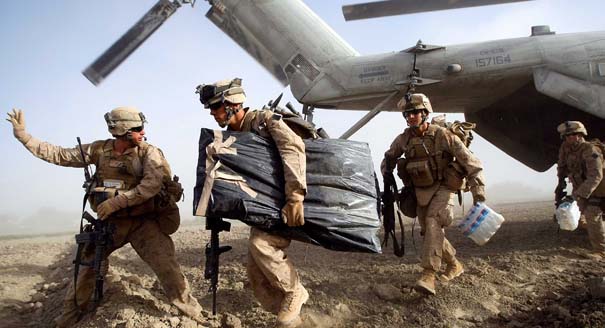
A combination of two critical problems threatens to undermine the mission of the United States–led coalition in Afghanistan: the failure of the counterinsurgency strategy and a disconnect between political objectives and military operations. If anything, the current strategy is making a political solution less likely, notably because it is antagonizing Pakistan without containing the rise of the armed opposition. That has put the coalition in a paradoxical situation, in which it is being weakened militarily by a non-negotiated and inevitable withdrawal while at the same time alienating potential negotiating partners.

The Obama administration has made new appointments to head the defense and intelligence agencies, and, in Afghanistan, has installed a new leadership to oversee U.S. military forces and named a new ambassador. The U.S. administration must take advantage of these appointments to establish greater coherence in both policy and operations:

  • The 2014 transition anticipated by the coalition is unrealistic because the Afghan army will not be capable of containing an insurgency that is gathering significant strength. If the transition were carried out, it would provide a considerable boost to the insurgency and, ultimately, the defeat of the Karzai regime. The July 2011 withdrawal must not significantly weaken the coalition, or it will create a military and political vacuum and ultimately make the success of the negotiations less likely.

  • In the border provinces of Pakistan, we are now seeing the creation of a sanctuary liable to harbor jihadist groups, including Lashkar-e-Taiba and al-Qaeda fighters. This is alarming because counterterrorism operations cannot eliminate groups in a sanctuary that is steadily growing larger. Meanwhile, the coalition’s operations are essentially focused on the southern regions where these jihadist groups do not exist. In practice, the only way to contain the threat posed by transnational jihadist groups is to politically reintegrate the Taliban and Hezb-e-Islami into a coalition government in order to isolate the most radical groups.

  • The Western withdrawal therefore inevitably requires a political agreement with the Taliban leadership, which implies abandoning the coalition’s reintegration policy. Confrontation with Pakistan is not an option since American leverage on Islamabad is limited and the Pakistani army has some influence over the insurgents, which would be useful should negotiations take place.

About the Author

Gilles Dorronsoro

Former Nonresident Scholar, South Asia Program

Dorronsoro’s research focuses on security and political development in Afghanistan. He was a professor of political science at the Sorbonne in Paris and the Institute of Political Studies of Rennes.

    Recent Work

  • Paper
    Building a Syrian State in a Time of Civil War

      Adam Baczko, Gilles Dorronsoro, Arthur Quesnay
  • Paper
    Waiting for the Taliban in Afghanistan

      Gilles Dorronsoro

Gilles Dorronsoro
Former Nonresident Scholar, South Asia Program
Gilles Dorronsoro

Additional Links

Full Text
South AsiaAfghanistanPakistanSecurityMilitaryForeign Policy

Carnegie does not take institutional positions on public policy issues; the views represented herein are those of the author(s) and do not necessarily reflect the views of Carnegie, its staff, or its trustees.

More Work from Carnegie Endowment for International Peace

  • Japanese troops take part in a counter-landing live fire exercise as part of the annual Balikatan joint military drills on May 04, 2026 in Laoag, Ilocos Norte province, Philippines.
    Article
    The Two Logics Driving Japan’s Security Policy

    Japan’s revision of its three strategic documents reflects an intention to keep the United States engaged in the region while Japan fills any vacuums of U.S. power to preserve the Indo-Pacific order.

      • Ryo Sahashi

      Ryo Sahashi

  • people watching a huge column of smoke in the distance
    Commentary
    Emissary
    Is the Russia-Ukraine War Vibe Shift Real?

    Media coverage suggests Kyiv’s fortunes have changed. That shift may be important, but it only goes so far.

      Dara Massicot, Aaron David Miller, Andrew S. Weiss

  • Lee and Lula walking
    Commentary
    Emissary
    Why Korea’s President Skipped Washington for Silicon Valley and Brasília

    Lee’s tour shows how Seoul is reorganizing its diplomacy away from Pyongyang and toward industrial networks and the geography of the compute economy.

      Darcie Draudt-Véjares

  • An AS3 interceptor part of the Merops, an AI-powered anti-drone system is pictured during a NATO live-fire demonstration of a counter-UAS system on November 18, 2025 in Nowa Deba, Poland.
    Paper
    Confronting the Barriers to AI Diffusion in the U.S. Military

    The Pentagon is calling for a rapid AI transformation. Autonomous drones offer a case study in the eight bottlenecks the U.S. military must navigate to realize that vision.

      Jake Steckler

  • People standing on rocks in the ocean near the shore, with soldiers in the foreground
    Commentary
    Emissary
    The Migration Wave That Embarrassed Morocco and Rattled Europe

    Most migrants may have left Ceuta, but the effects may linger.

      • Alejandro Rodriguez
      • Sarah Yerkes

      Alejandro Martin Rodriguez, Sarah Yerkes

Get more news and analysis from
Carnegie Endowment for International Peace
Carnegie global logo, stacked
1779 Massachusetts Avenue NWWashington, DC, 20036-2103Phone: 202 483 7600
  • Research
  • Emissary
  • About
  • Experts
  • Donate
  • Programs
  • Events
  • Blogs
  • Podcasts
  • Contact
  • Annual Reports
  • Careers
  • Privacy
  • For Media
  • Government Resources
Get more news and analysis from
Carnegie Endowment for International Peace
© 2026 Carnegie Endowment for International Peace. All rights reserved.