

Commentary
Bashir Kitachaev
{
  "authors": [
    "Bashir Kitachaev"
  ],
  "type": "commentary",
  "blog": "Carnegie Politika",
  "centerAffiliationAll": "",
  "centers": [
    "Carnegie Endowment for International Peace",
    "Carnegie Russia Eurasia Center"
  ],
  "collections": [
    "Aso Tavitian Initiative"
  ],
  "englishNewsletterAll": "",
  "nonEnglishNewsletterAll": "",
  "primaryCenter": "Carnegie Russia Eurasia Center",
  "programAffiliation": "",
  "regions": [
    "Georgia",
    "Caucasus"
  ],
  "topics": [
    "Foreign Policy",
    "Trade",
    "Global Governance"
  ]
}
Source: Getty
With the White House only interested in economic dealmaking, Georgia finds itself eclipsed by what Armenia and Azerbaijan can offer.
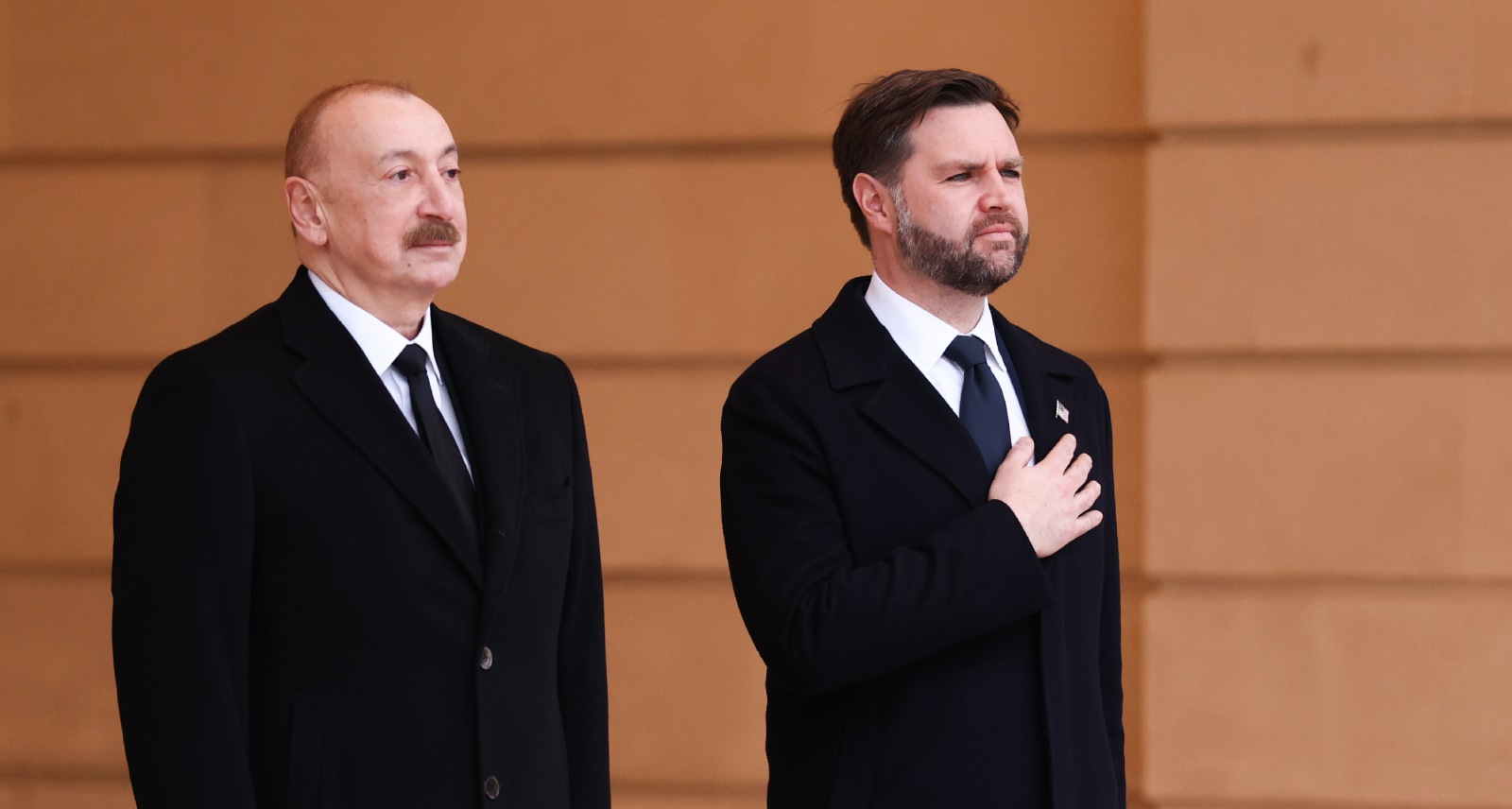
A tour by U.S. Vice President JD Vance through the South Caucasus in February showed Washington has not lost interest in the region, but the trip provoked much consternation in Georgia. It wasn’t so long ago that Georgia was considered to be Washington’s main partner in the South Caucasus—but this time Vance only visited Armenia and Azerbaijan.
The United States has not even asked Tbilisi to join Trump’s new Board of Peace, despite issuing invitations to both Yerevan and Baku. And the agreement that Vance discussed on his visit to the region does not bode well for Georgia.
If finalized, it will mean a partnership between the United States, Armenia, and Azerbaijan on energy, security, and building the Trump Route for International Peace and Prosperity (TRIPP) linking Azerbaijan with its exclave of Nakhchivan via southern Armenia, which is intended to become a new transport artery connecting Asia and Europe. Inevitably, the realization of such a project would downgrade Georgia’s importance in terms of transit: the country has long been considered the region’s main east-west transport corridor.
Georgia’s attempts to reset relations with the United States after Donald Trump’s return to the White House in 2025 have been unsuccessful. Instead, they have only served to underline how the country is being ignored.
The ruling Georgian Dream party had hoped its conservative rhetoric would resonate with Trump and restore the Georgian government’s legitimacy in the eyes of the West. Tbilisi abandoned its anti-American rhetoric, and Prime Minister Irakli Kobakhidze wrote Trump a letter in which he said Georgia was a “loyal strategic partner” and expressed surprise at the parlous state of relations.
“We spoke openly about the criminal activity of the ‘deep state,’ USAID, NED [National Endowment for Democracy], and other groups years before you made similar statements. We have identical assessments of the war in Ukraine, gender and LGBT propaganda, and many other issues,” Kobakhidze wrote. He also complained that sanctions imposed on Georgia by Trump’s predecessor, Joe Biden, were still in place. Kobakhidze never received a reply.
The silence emanating from Washington has obliged Tbilisi to try to portray sporadic contact with U.S. officials as a sign of a thaw in relations. Georgian President Mikheil Kavelashvili, for example, sought to spin a short conversation with Vance at an international event in Milan as all but full-scale negotiations. The White House made no mention of these “negotiations.”
While the State Department says it is still interested in a constructive relationship with Georgia, U.S. officials stress that Tbilisi needs to take certain steps—such as reversing the country’s democratic backsliding—for this to happen. Indeed, Georgia finds itself one of the few countries the Trump administration appears happy to criticize for censorship, jailing its political opponents, and electoral fraud.
It’s hard to imagine that problems with democratic freedoms are really what is preventing Washington from deepening ties with Tbilisi. It’s much more likely to be a change in the logic of U.S. policy in the South Caucasus.
While Georgia may once have been an important ideological partner for Washington when it came to building democracy in the post-Soviet space (albeit not a very successful one), the United States is no longer interested in purely political ventures. Trump wants to reshape the world order through dealmaking and infrastructure projects that can instantly generate geopolitical and economic gains.
In this context, Armenia and Azerbaijan are far more useful for Washington. Even without Trump’s help, Yerevan was moving away from Russia and seeking to work with the United States on energy. And Baku—despite its authoritarianism—can offer natural resources and military cooperation.
Together, Baku and Yerevan give the White House an opportunity to announce the triumphant resolution of another long-running military conflict and establish TRIPP as a key link between Asia and Europe that bypasses Russia. And since Armenia and Azerbaijan were already working on a peace agreement, all Washington had to do was get them to sit down together at the same table.
As a result, Georgia finds itself in a tight spot. On the one hand, it has lost its reputation as a model democracy in the post-Soviet region. Relations have deteriorated not only with Europe, but also with the United States—and efforts at a reset have failed. On the other hand, Tbilisi cannot offer Washington any major joint projects that are comparable with the size and scale of what is being offered by Yerevan and Baku.
If TRIPP is built, Georgia will lose its position as a major transit country connecting the Caspian Sea to the Black Sea. Azerbaijani President Ilham Aliyev has already said publicly that once TRIPP is in operation, it will be able to handle the majority of the region’s cargo throughput.
Furthermore, it seems that the United States no longer sees Georgia as a reliable partner. To a large extent, this appears to be driven by Tbilisi allowing a Chinese-led consortium to build a deep-water port at Anaklia on the Black Sea. Initially, the port was conceived as a way to consolidate Georgia’s role in transit routes bypassing Russia. But a proposal involving Western investors was scrapped, and control handed to the Chinese-led consortium. In Washington, this was taken as a sign of Tbilisi’s changing geopolitical priorities.
For the moment, it seems sufficient for the White House that Georgia does not become a full-fledged Russian ally. U.S. officials are far more interested in deals with Azerbaijan and Armenia than any ideological affinity with Georgian Dream.
It will not be easy for Georgia to make itself a U.S. priority again and reestablish its position as Washington’s favored partner in the South Caucasus. It’s extremely unlikely that domestic political liberalization would be enough to win over the United States—particularly under the Trump administration.
The only viable strategy for Tbilisi seems to be to try to pursue a clean break with China, reclaim its reputation as a reliable U.S. partner, and propose U.S. involvement in some high-profile projects. However, it seems unlikely that Georgia is ready for such dramatic changes—not least because there is no guarantee of success.

Journalist specializing on the South Caucasus region
Recent Work
Bashir Kitachaev
Bashir Kitachaev
Carnegie does not take institutional positions on public policy issues; the views represented herein are those of the author(s) and do not necessarily reflect the views of Carnegie, its staff, or its trustees.

Russia’s AI-driven propaganda campaigns operate in a fragmented, chaotic, and often illogical manner. That’s not necessarily a problem for the Kremlin, though: It’s much easier to mimic genuine public debate that way.

Ilya Klishin

Without a ceasefire with Ukraine on attacking each other’s energy infrastructure—to which the Kremlin is unlikely to agree—the diesel agreement between Putin and Trump is largely for show, rather than representing a genuine increase in the volumes of Russian diesel on the global market.

Sergey Vakulenko

Despite a new textbook, an influx of Russian teachers and managers, and an end to the teaching of Ukrainian, the Kremlin is unlikely to have “reprogrammed” locals.

Konstantin Skorkin

Cargo traffic through Russia’s Northern Sea Route has increased because of the disruption caused by the conflict in the Middle East, the Ukraine war, and U.S.-China tensions.

Mikhail Korostikov

Trump has promised Belarus a massive potash deal. But Minsk is seeking something greater: restored Western transit and greater room for maneuver from Russia.

Balázs Jarábik