

Article
For ninety years, Turkey has been positioned as the principal gatekeeper of Black Sea security. As a result, European and NATO efforts to support Ukraine will require closer engagement with Ankara.
{
  "authors": [
    "Dimitar Bechev"
  ],
  "type": "commentary",
  "centerAffiliationAll": "",
  "centers": [
    "Carnegie Endowment for International Peace",
    "Carnegie Europe"
  ],
  "englishNewsletterAll": "",
  "nonEnglishNewsletterAll": "",
  "primaryCenter": "Carnegie Europe",
  "programAffiliation": "",
  "regions": [
    "Türkiye",
    "Eastern Europe",
    "Russia",
    "Ukraine"
  ],
  "topics": [
    "Military",
    "Security",
    "EU",
    "Foreign Policy"
  ]
}
Source: Getty
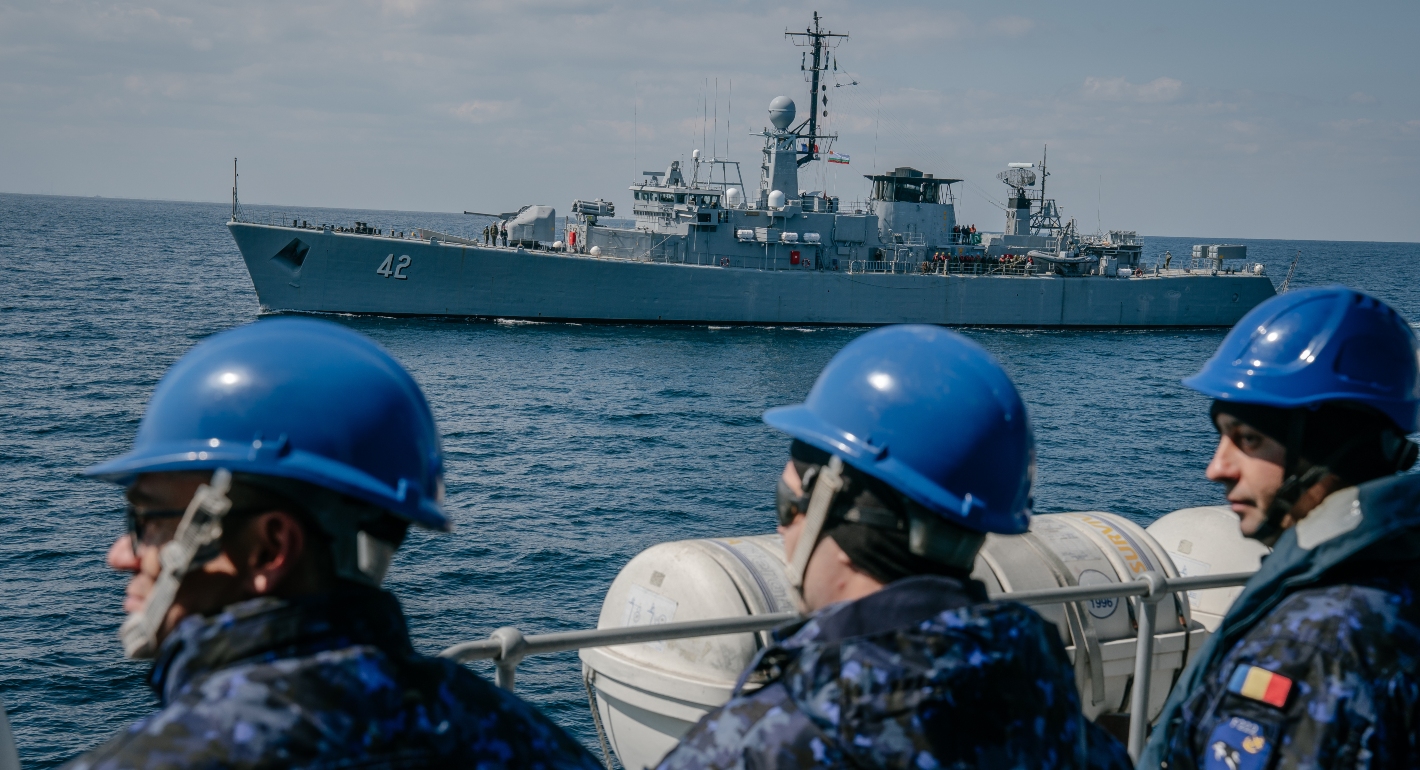
As Russia's war on Ukraine drags on, NATO is expanding its footprint in the Black Sea. Turkey, Romania, and Bulgaria are upgrading their fleets and deepening trilateral cooperation.
NATO has long been the bogeyman Russia points to in justifying its aggression against Ukraine. Paradoxically, Moscow’s 2022 full-scale invasion of its neighbor has turned the alliance’s expansion into a self-fulfilling prophecy. The creeping NATO-ization of the Black Sea is a case in point. The organization’s July 7–8 summit in Ankara showed that the alliance is more involved in the area than ever. Turkey remains a pivotal player, while other NATO members, such as Romania and Bulgaria, are upgrading their capabilities and investing in three-way cooperation with the Turks.
In the meantime, Ukraine has been carrying out strikes against Russian infrastructure, oil facilities, and shipping, eroding Russia’s position in Crimea and the wider Black Sea. The support NATO pledged in Ankara for Ukraine might give Kyiv an even greater opportunity to put pressure on the Russians.
Ukraine saw some setbacks in the Black Sea at the start of Russia’s full-scale invasion. It lost access to the Sea of Azov, and the ports of Mykolaiv and Odesa came under threat. Kyiv lost its flagship, Hetman Sahaidachnyy.
Yet, soon enough Ukraine regained the initiative, expelling the Russians from the strategically located Snake Island and sinking Moskva, the flagship of the Russian Black Sea Fleet. Ukraine developed new capabilities—unmanned naval systems, such as Magura V5 and Sea Baby, and mid- and long-range unmanned aerial vehicles—which, over the last three years, have tipped the military balance.
In July 2023, Ukraine launched a naval drone attack on the Kerch Bridge, which connects occupied Crimea to the Russian mainland. Since then, the bridge has occasionally been closed to traffic and has been reinforced with extra defenses to counter drones.
Two months later, Ukrainian unmanned naval systems and missiles damaged a Russian landing ship and a submarine at Crimea’s main port of Sevastopol. Two other naval vessels and an oil tanker were hit in two further attacks the same year.
In 2024, there were 125 reported attacks, as a result of which the Russian Black Sea Fleet relocated from Sevastopol to Novorossiysk.
In November 2025, Ukraine started to target Russian commercial vessels, including tankers from the so-called shadow fleet. The attacks came in response to Russian strikes against civilian infrastructure, including facilities and ships in Odesa, and ended a de facto truce for nonmilitary vessels in the Black Sea.
Ukraine’s drone campaign has escalated through 2026, with attacks on Russian oil facilities around Novorossiysk, Kerch, and other coastal areas as well as on infrastructure that connects Crimea to the Russian mainland, leading to fuel shortages in the occupied peninsula.
Russian shipping in the Sea of Azov has come under attack, too, with multiple tankers and transport vessels having been hit.
To be sure, the Russian Black Sea Fleet still poses a threat, with ship- and submarine-launched Kalibr cruise missiles involved periodically in combined strikes against Ukrainian targets. Russian drones are a challenge as well: On June 22, one hit a Turkish cargo ship sailing under a Panamanian flag. Another drone strayed and hit a residential building in the Romanian city of Galați in late May. In addition, Russia is developing its own unmanned naval systems, which could endanger Ukraine and its neighbors.
However, in the grand scheme of things, Kyiv has the upper hand. It has leveraged military innovation to turn the tables on Russia in the Black Sea, retaining access to the high seas while successfully applying coercion.
As the war in Ukraine proceeds, NATO is expanding its footprint, often under the radar. Technically, it is absent from the maritime domain. That is due to restrictions imposed by the Montreux Convention, which is scrupulously enforced by Turkey. Since 2022, NATO allies no longer deploy their ships to the Black Sea on a rotational basis. The alliance’s annual Sea Breeze exercises, traditionally co-led by the United States and Ukraine with the participation of NATO countries, are conducted in faraway waters.
In 2025, for instance, the drill to help Ukraine train what remains of its fleet took place off the UK’s south coast. It involved four Ukrainian mine hunters based in Portsmouth: Chernihiv and Cherkasy (donated by the Royal Navy), Mariupol (donated by Belgium), and Melitopol (donated by the Netherlands). Yet, the closure of the Black Sea cuts both ways: As Carnegie’s Thomas de Waal has shown, it has prevented Russia from reinforcing its Black Sea Fleet.
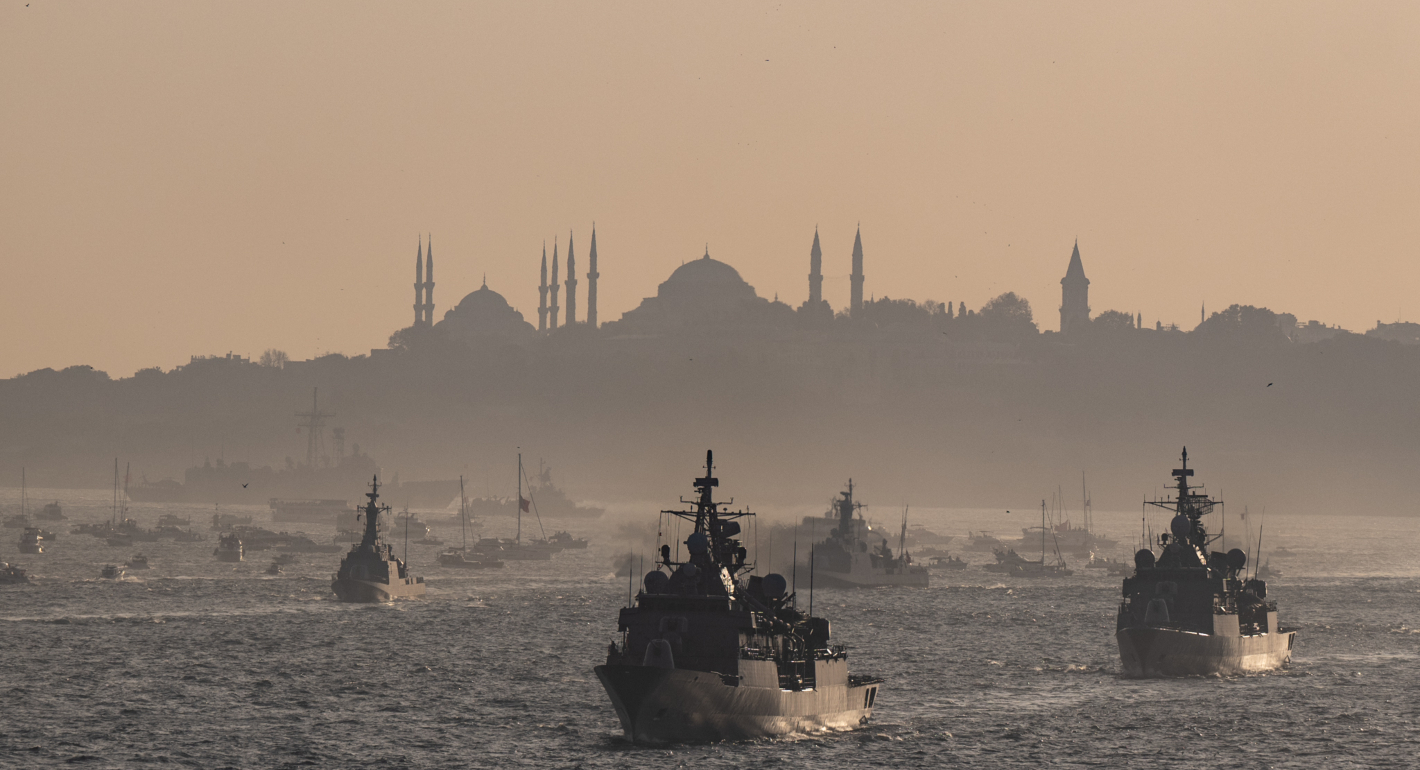
For ninety years, Turkey has been positioned as the principal gatekeeper of Black Sea security. As a result, European and NATO efforts to support Ukraine will require closer engagement with Ankara.
However, NATO is present on land and in the air. In 2022, the alliance positioned multinational brigades in Romania and Bulgaria, led by France and Italy, respectively. The alliance also runs an air-policing mission, with the UK, France, and Belgium carrying out a joint surveillance exercise over the Black Sea in July 2025. The Mihail Kogălniceanu Air Base next to the Romanian port city of Constanța has become a principal operational and logistical hub on NATO’s Eastern flank. Greece, Bulgaria, and Romania have established a supply corridor using rail links that run parallel to the Black Sea coast to transfer matériel to Ukraine.
Faced with a war on their doorstep, NATO members in the Black Sea have upgraded their navies and forged closer links.
Turkey continues to modernize and expand its navy. In January 2024, Ankara commissioned TCG Istanbul, the first of ten multirole frigates built in the country under its MILGEM shipbuilding program. Turkey is keen to find markets for its ships. Last year, the Turkish Secretariat of Defense Industries signed a contract with Indonesia for two of the vessels.
Turkey’s Black Sea neighbors have become prime destinations for its exports. In July 2026, Romania received a patrol vessel produced under MILGEM. Contraamiral Roman has been fitted with Norwegian-made naval strike missiles. The €223 million ($255 million) contract might pave the way to a long-term partnership. Romania’s military has a contract for 1,059 Cobra II armored vehicles with the Turkish manufacturer Otokar, which has set up a facility in the country.
Romania is moving forward with plans to build four more vessels, two of which are designed to light-corvette standard. The program is funded by the EU’s Security Action for Europe (SAFE) instrument, which allocates €8.3 billion ($9.5 billion) to Romanian projects, and carried out in partnership with Germany’s Rheinmetall. It fills the gap left after the unraveling of a €1.2 billion ($1.4 billion) deal with France’s Naval Group industrial company for the production of four Gowind-class corvettes and the renovation of two frigates at Constanța shipyards. Bucharest is envisaging an increase in defense spending from the current equivalent of 2.24 percent of GDP to 3 percent by the next decade, a third of which will go into equipment.
Romania’s deal with Rheinmetall draws on Bulgaria’s example. The Bulgarian navy has started sea trials for Hrabri (meaning “Courageous”), the first of two corvettes designed by Germany’s NVL Group and built at the MTG Dolphin shipyard in the Bulgarian port city of Varna. The vessel is fitted with state-of-the-art radars, antisubmarine capabilities, and electronic warfare systems supplied by Rheinmetall, SAAB, and Leonardo as well as a flight deck for operating helicopters and unmanned aerial vehicles. In December 2025, the Bulgarian navy launched Smeli (“Brave”), the second corvette.
Bulgaria has also received seven mine countermeasure ships (MCMs) free of charge from Belgium and the Netherlands in exchange for a commitment to train Ukrainian crews. Sofia has allocated €42 million ($48 million) for the modernization of MCMs.
Turkey, Romania, and Bulgaria have teamed up in an effort to secure Black Sea shipping lanes. In July 2024, the three countries’ navy chiefs—Ercüment Tatlıoğlu, Mihai Panait, and Kiril Mihaylov—activated a joint mine-clearance operation. Since 2022, drifting mines have endangered commercial traffic through the Black Sea and, on several occasions, have been washed ashore in the three countries. Since fall 2023, Ukrainian ships exclusively use Romanian, Bulgarian, or Turkish territorial waters in the Black Sea, and currently an estimated 90 percent of Kyiv’s agricultural exports rely on these routes.
Should the war in Ukraine end, cooperation could expand into civilian areas, such as tackling environmental degradation in the Black Sea. Combat on land and at sea has further harmed already-precarious marine ecosystems affected by oil spillages and the discharge of toxic substances into Ukraine’s rivers.
Turkey used July’s NATO summit in Ankara to showcase its support for Ukraine and its contribution to the defense of Europe and to the alliance’s cohesion. Having U.S. President Donald Trump in attendance and securing a commitment to co-produce Patriot missiles with Ukraine can be chalked up as achievements for the hosts, too.
In the longer term, Turkey wants to be part of a settlement in Ukraine and the Black Sea. Ankara is ready to lead the naval component of a future multinational force deployed after a putative ceasefire. A command center has been set up in Istanbul’s Beykoz district. Turkey will likely be interested in confidence-building measures, especially when it comes to commercial shipping and the freedom of navigation in the Black Sea. However, there is still a long way to go. The Black Sea remains as choppy as ever.

Senior Fellow, Carnegie Europe
Dimitar Bechev is a senior fellow at Carnegie Europe, where he focuses on EU enlargement, the Western Balkans, and Eastern Europe.
Recent Work
Dimitar Bechev



Miloš Pavković, Fitim Gashi, Iliriana Gjoni, …
Carnegie does not take institutional positions on public policy issues; the views represented herein are those of the author(s) and do not necessarily reflect the views of Carnegie, its staff, or its trustees.

The European far right might fail to steer EU policy in the direction Russia wants, but they will create enough chaos inside Europe to benefit the Kremlin.
Dimitar Bechev

Minsk clearly expected the dialogue with Washington to yield more results, in particular the lifting of EU sanctions and permission to export potash.

Artyom Shraibman

If the Russian-speaking community in Latvia cannot articulate their interests without being seen as disloyal, they could end up embracing a pro-Kremlin agenda.

Sergejs Potapkins

Russia’s ruling party would have benefited from Putin appearing as its distant patron, but as an active frontman imposing his views on the public, he has done nothing but harm both the party’s election campaign and the ruling system overall.

Andrey Pertsev

Depleted financial reserves and a shrinking tax base mean it is no longer possible to simultaneously deliver high defense spending, price stability, and economic growth.

Alexandra Prokopenko